
If you own a Chevy or GMC truck with the legendary LBZ Duramax, you already know one thing: this engine is a beast. But there's also something you've probably noticed over time—a gradual loss of throttle response, higher exhaust temperatures when towing, and an intake manifold slowly choking on its own carbon buildup. The culprit isn't age. It's the EGR system.The good news? You don't have to live with it.
Removing the EGR system—when done correctly with quality hardware and a professional ECM tune—unlocks measurable gains: lower combustion temperatures, cleaner进气 (intake) components, better fuel economy, and a noticeable improvement in how the engine feels under load.
How EGR Works and What It Costs
Exhaust Gas Recirculation (EGR) is a key method diesel engines use to reduce nitrogen oxide (NOx) emissions. It works by sending a portion of exhaust back into the intake manifold, which lowers oxygen concentration and peak combustion temperatures. From an emissions standpoint, this is effective. But from the perspective of engine efficiency and long-term durability, EGR brings three unavoidable downsides.
the intake system gets clogged
Soot particles in the exhaust accumulate over time on intake manifold walls, valve backs, and inside the intercooler. This carbon buildup restricts airflow and steadily reduces volumetric efficiency.
engine heat load increases
The recirculated exhaust is hot, which raises intake air temperatures. That leads to higher temperatures at the end of the compression stroke, putting extra thermal stress on pistons, cylinder heads, and valves.
combustion quality suffers
Exhaust gas takes up space that would otherwise hold fresh, oxygen-rich air. Lower oxygen concentration means less complete combustion. The direct results are reduced power output and worse fuel economy.
What Actually Changes When You Delete EGR
After physically removing the EGR hardware and professionally recalibrating the engine control module (ECM), an LBZ engine shows several measurable improvements.
The intake system stays clean
With no more hot, soot-laden exhaust entering the intake path, the source of carbon buildup is gone. Intake manifolds, intercoolers, and valve areas remain clean long-term, which keeps airflow resistance low and maintains optimal volumetric efficiency.
Combustion temperatures drop
Blocking the EGR path allows intake air temperatures to return to near-ambient levels (after the turbo and intercooler).. Pistons, valves, and cylinder heads see less thermal stress, which improves long-term engine durability.
Combustion becomes more complete
The proportion of fresh air in the cylinders increases, and oxygen density returns to the engine's original design levels. Fuel burns more thoroughly and efficiently. Drivers typically notice sharper throttle response, less acceleration lag, and under heavy loads (like towing) the engine runs easier with less strain on the cooling system.
Maintenance gets simpler
Common failure points—like stuck EGR valves or clogged or leaking EGR coolers—are eliminated entirely. The expensive and time-consuming intake cleaning services that used to be required become mostly unnecessary, saving money on parts and labor over the life of the vehicle.
Three Things You Must Get Right for a Successful Delete
-
The ECM must be retuned. Without it, the check engine light will come on, and the engine may go into a reduced-power "limp" mode.
-
Use quality hardware. Choose kits made from heat-resistant materials like T-409 or 304 stainless steel. This ensures reliable, long-term sealing under high heat and pressure.
-
Install it properly. Follow the instructions carefully. If you're not confident, pay a professional shop to do it.
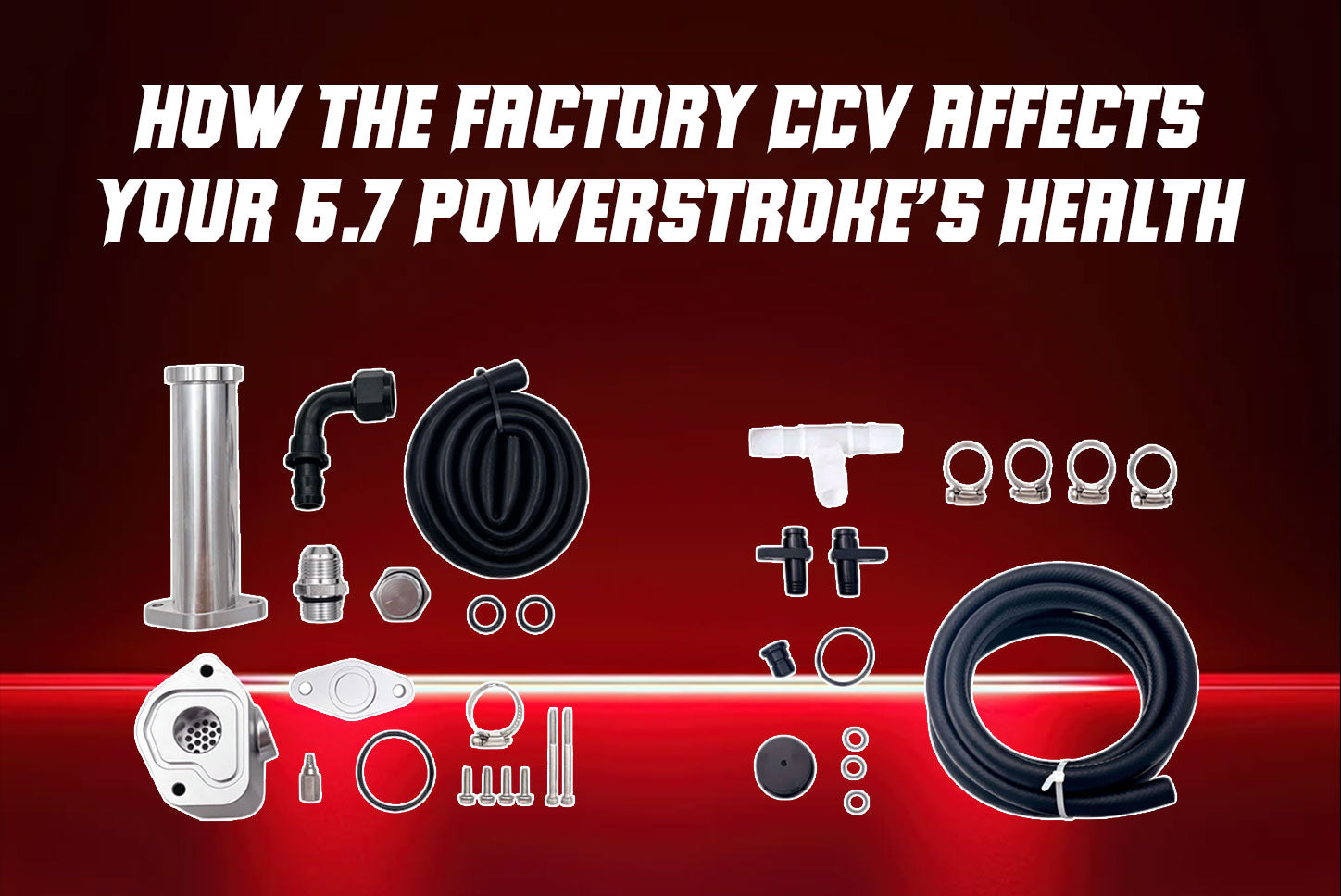
High-performance EGR Delete Kits
2006-2007 6.6L GMC Duramax LBZ Classic Diesel EGR Valve Cooler Delete Kit
This EGR Upgrade kit completely replaces the factory EGR cooler and valve assembly, and enhances the reliability of the truck, eliminating the need for regular maintenance.

Core Materials:
-
Aluminum block-off plates – lightweight construction with excellent heat tolerance
-
Reinforced stainless steel piping – high resistance to corrosion for extended service life
-
High-temperature silicone seals – maintain reliable, long-term sealing at all connection points
Claimed Performance Benefits:
-
Improved fuel efficiency – restores the ideal air-fuel ratio for more complete combustion
-
Significantly lower combustion chamber temperatures – temperature drop exceeding 120°C (215°F), which helps reduce the risk of cracked cylinder heads
-
Optimized cooling system operation – improved coolant flow efficiency
-
Permanent prevention of intake carbon buildup – stops soot from entering the intake path, keeping manifolds and valves clean indefinitely
2006-2007 6.6L Chevy Silverado Classic GMC Duramax LBZ Diesel EGR Delete Kit
This kit is specifically designed for the passenger-side plumbing configuration of the LBZ engine. It can accelerate the circulation speed of the engine coolant, clean the intake, and increase the horsepower.

Core Materials:
- Aluminum for lightweight structural components
- Stainless steel for heat-exposed piping
- High-temperature silicone for gaskets and seals
Quality and Manufacturing Features:
-
All welded joints are pressure-tested – each kit is verified to have no leaks before shipment
-
Bolt-on design – no cutting, welding, or permanent modification to the vehicle's original structure
-
Application-specific shaping – the pipe geometry is precisely formed to match the passenger-side factory routing
Should You Install It Yourself or Hire a Pro?
If you're reasonably handy, self-installation is possible. Difficulty is moderate.
What to do beforehand:
Disconnect the battery. Gather 8mm, 10mm, and 13mm sockets, screwdrivers, and a drain pan for coolant. Make sure the engine is completely cold.
Main steps:
Remove the intake tube and air cleaner housing. Disconnect the EGR cooler lines (catch the coolant in the pan) and the electrical connectors. Remove the EGR cooler and valve assembly. Install the delete kit's block-off plate and high-flow intake elbow. Reassemble everything in reverse order. Refill coolant and reconnect the battery.
After installation:
Start the engine and check for leaks or unusual noises. Take a short test drive. Re-torque critical bolts after 50–100 miles.
Important note:
If you're not comfortable working under the hood or don't have the right tools, strongly consider having a professional shop do the work. This isn't a knock on your skills—it's about avoiding future leaks and making sure the upgrade performs as intended.
Conclusion
For LBZ Duramax owners who value reliability and performance, deleting the EGR system is a well-proven upgrade. Combined with a professional ECU tune and a quality stainless steel kit, you can expect a 15–25 horsepower gain, significantly lower heat load, permanent elimination of carbon buildup, longer engine life, and a smoother towing experience. Whether you do the work yourself or pay a professional, this is a solid foundation for performance. Visit dieseltok.com for complete solutions designed for 2006–2007 LBZ trucks.
FAQs About LBZ EGR Delete Kits
Q1: Coolant is leaking after installing a delete kit. What's wrong?
A1: This is usually a bad gasket or loose bolts. Check that the gasket is seated correctly and the sealing surfaces are clean and smooth. If it still leaks, contact tech support.
Q2: Will deleting EGR damage my LBZ engine?
A2: When done correctly with a proper ECM tune, deleting EGR actually improves reliability and efficiency. But improper installation or skipping the retune will cause problems. That's why experienced technicians or reputable shops are recommended.
Q3: Can I still drive if my LBZ EGR valve fails?
A3: You might be able to go a short distance, but it's not recommended. A failed EGR valve won't necessarily strand you immediately, but it can cause poor combustion, increased carbon buildup, and possibly damage other components.
Q4: Is ECM tuning required after EGR delete?
A4: Yes. Also, please note that removing the exhaust gas recirculation system may violate the emission regulations in your area. Before taking any action, please refer to the relevant local regulations first.
Q5: Will EGR delete improve fuel economy on an LBZ?
A5: Yes. Most LBZ owners report a consistent 1–3 MPG improvement after deleting EGR. The reasons are straightforward: lower exhaust restriction, cleaner intake air, and more complete combustion.