
What the Factory LBZ PCV System Is Doing to Your Engine
The 2006-2007 LBZ Duramax is the last of the pre-DPF Duramax engines, and for a lot of owners that makes it the holy grail. No diesel particulate filter, no diesel exhaust fluid, no ninth injector — just a mechanical inline-six that pulls hard and runs long. But there’s one factory design choice on the LBZ that every high-mileage owner eventually confronts: the closed-circuit PCV system.
Here’s how it works from the factory. Combustion blow-by — the small amount of exhaust gas that sneaks past the piston rings — pressurizes the crankcase. The factory positive crankcase ventilation system routes that pressure, along with the aerosolized oil mist it carries, through a metal tube that feeds directly into the intake tract, just ahead of the turbocharger compressor inlet.
The engine breathes it back in. All of it. The oil mist, the exhaust particulates, the condensation moisture — everything that the LBZ’s crankcase exhales, the intake inhales.
Over tens of thousands of miles, this oil vapor deposits itself on every surface between the PCV inlet and the cylinder head. The turbocharger compressor wheel develops a tacky coating that affects its aerodynamic efficiency. The intercooler accumulates an oil film on its internal passages that reduces heat transfer. The intake manifold and cylinder head ports build up a black, gummy layer of baked-on oil-and-carbon sludge that narrows the airflow path and creates hot spots.
An LBZ with 150,000 miles of factory PCV routing almost always has a measurable layer of oil in the intercooler. Pull the cold-side intercooler boot and wipe your finger inside — if it comes out black and slick, that’s your PCV system at work.
On a stock truck driven gently, the effect is gradual. On a tuned LBZ making more boost and more cylinder pressure — and therefore more blow-by — the oil accumulation accelerates. A deleted and tuned LBZ pushing 30-plus pounds of boost pushes proportionally more crankcase vapor through that same factory PCV line into the same intake tract, and the oil buildup compounds faster.
What a PCV Reroute Actually Does
A PCV reroute is exactly what it sounds like: you disconnect the factory PCV line from the intake and route it somewhere else, usually down to atmosphere near the bottom of the engine bay or into a vented catch can. The crankcase still breathes — it still vents pressure and oil mist — but that oily air no longer enters the intake tract.
The engine pulls clean, dry air through the air filter and turbocharger, the way it was always supposed to before the EPA decided that venting a few ounces of oil vapor per thousand miles was an environmental crisis.
The immediate benefits are cumulative. Without oil mist coating the intercooler, charge air temperatures drop. Without oil residue on the compressor wheel, turbocharger response sharpens. Without sludge narrowing the intake runners, volumetric efficiency improves. These gains are subtle on a stock engine but become measurable on a tuned LBZ, where the intercooler is working harder and any reduction in heat transfer efficiency costs you power.
There is also a maintenance benefit that’s harder to quantify but easy to feel: the engine bay stays cleaner. The factory PCV routing eventually weeps oil at the intake connections, and a six-year-old LBZ with factory PCV has a layer of oil-saturated grime around the turbo inlet and intercooler piping. The reroute eliminates that entirely.
LBZ vs Other Duramax Generations: What’s Different
The LBZ’s PCV system is mechanically similar to the LLY before it and the LMM after it, but the context matters.
LBZ vs LLY: The LLY (2004.5-2005) used the same basic PCV routing into the intake tract, but the LLY runs lower factory boost pressure and slightly less aggressive fueling. The problem exists on the LLY too, but the LBZ’s higher factory output — 360 horsepower and 650 pound-feet versus the LLY’s 310 and 605 — means more blow-by and more oil throughput. The LBZ accelerates the problem faster.
LBZ vs LMM: The LMM (2007.5-2010) introduced the DPF, which changed how owners think about emissions hardware entirely. On an LMM, a PCV reroute is one item on a longer modification list that often includes DPF delete and EGR delete. On the LBZ, the PCV reroute is frequently the only emissions modification the truck needs because there’s no DPF or DEF system to worry about. It’s a simpler equation: fix the one thing the factory got wrong, and the rest of the engine is already right.
LBZ vs LML/L5P: The LML and L5P use a fundamentally different PCV architecture. They route crankcase vapors through an oil separator before the intake, and they have larger PCV plumbing to handle the increased blow-by of higher compression ratios. The reroute concept is the same, but the LBZ’s simpler, more compact PCV routing makes it the easiest Duramax generation to reroute — and the one where owners are most likely to do it themselves.
This is why the LBZ specifically has become synonymous with the PCV reroute: it’s the classic, it doesn’t need a dozen other modifications to run right, and the reroute is simple enough for a Saturday morning with basic hand tools.
How to Install an LBZ PCV Reroute Kit
The LBZ PCV reroute is one of the most accessible do-it-yourself modifications on any Duramax. You don’t need a lift, you don’t need to drain fluids, and a complete install takes under an hour.
What You’ll Need
A basic metric socket set — 10mm and 13mm sockets will cover almost everything on the LBZ’s PCV plumbing. A flathead screwdriver for hose clamps. Pliers for the factory spring clamps if you’d rather not wrestle them bare-handed. Zip ties for securing the new vent hose along its routing path. That’s it.
Step 1: Locate the Factory PCV Line
Pop the hood on your LBZ and look at the driver’s side of the engine. The PCV system starts at the valve cover, where a metal tube exits near the rear of the cover and runs forward toward the turbocharger inlet. Follow that metal tube — it will transition to a rubber hose section, then connect to the intake duct just ahead of the turbo compressor housing.
This is the line you’re disconnecting. Everything downstream of this point — the turbo, the hot-side intercooler pipe, the intercooler itself, the cold-side pipe, the intake manifold — is currently eating whatever comes out of that tube.
Step 2: Remove the Factory PCV Line
Disconnect the rubber PCV hose from the intake duct. There’s typically a spring clamp or worm-gear clamp at this connection. Remove it and pull the hose free. Cap the open port on the intake duct — most reroute kits include a rubber or silicone cap for this, sized to fit the LBZ’s intake pipe diameter. If your kit doesn’t include one, a vacuum cap from any auto parts store works.
Now disconnect the PCV line from the valve cover side. Depending on the year and whether the truck has had prior work, this may be a bolted flange fitting or a push-in connection. The factory uses a metal tube with a rubber grommet at the valve cover — you’re removing that tube entirely.
Step 3: Install the Reroute Fitting and Vent Hose
The reroute kit replaces the factory metal PCV tube with a fitting that threads or presses into the valve cover PCV port, then provides a hose barb for the new vent hose. Install the fitting into the valve cover PCV port. Make sure the seal is seated — a leak here would be a small crankcase pressure leak, not a performance problem, but it’ll make a mess.
Attach the supplied vent hose to the fitting barb. A worm-gear clamp here is good practice. Route the hose downward, away from the exhaust manifold and turbocharger hot side. The hose needs enough slope that any condensed oil drains out rather than pooling in a low spot and blocking airflow.
The discharge end of the hose exits under the truck, typically zip-tied to the frame rail or lower radiator support. Aim the outlet so that the small amount of oil mist that exits doesn’t blow directly onto a suspension bushing or brake line. A foot or two of clearance from hot exhaust components is ideal.
Step 4: Verify and Test
Start the engine. You should feel a steady, light puff of air at the vent hose outlet — that’s normal crankcase pressure. There should be no vacuum at the vent outlet, which would indicate the valve cover fitting is restricted or the hose is kinked.
Check the capped intake port. There should be no vacuum leak or hissing sound — the cap should be fully sealed. A vacuum leak at the intake port will cause unmetered air to enter the turbocharger, which can trigger a MAF correlation code or cause a lean condition at idle.
Take a short test drive. The reroute doesn’t change the engine’s behavior in any way you’ll feel from the driver’s seat — that’s the point. The difference is cumulative, measured in thousands of miles of clean air instead of oil mist.
Does a PCV Reroute Throw a Check Engine Light?
On the LBZ Duramax, the answer is no. The PCV system is purely mechanical — there is no PCV flow sensor, no PCV pressure transducer, and no electrical monitoring of the crankcase ventilation circuit. The ECM has no awareness of whether crankcase vapors are entering the intake or venting to atmosphere.
This is different from some newer diesel platforms where a PCV heater element or a CCV pressure sensor can trigger a soft code when disconnected. The LBZ’s electrical simplicity — part of why it’s the classic Duramax — extends to the PCV system. Disconnect, reroute, and drive.
PCV Reroute vs Catch Can: Which One?
A vent-to-atmosphere reroute and a closed-loop catch can accomplish the same goal — keep oil out of the intake — by different methods.
A catch can routes crankcase vapor through a baffled canister that condenses the oil mist and drains it into a reservoir, then returns the cleaned air to the intake tract. It’s the emissions-compliant option. A vent-to-atmosphere reroute simply dumps everything outside.
The catch can has one advantage: no oil mist under the truck. The reroute has two: lower cost and zero maintenance. A catch can fills with oil and needs to be emptied regularly; a vent tube empties itself. An LBZ that sees heavy towing or high boost can fill a small catch can in as little as 500 miles.
For most LBZ owners, the simplicity of a vented reroute wins. The amount of oil emitted is minuscule — ounces per thousand miles — and there’s no filter to replace, no can to drain, and no hose to route back to the intake.
Conclusion
The LBZ Duramax’s factory PCV routing is an emissions compromise that slowly costs you intake cleanliness, intercooler efficiency, and turbocharger performance. On an engine that is otherwise remarkably free of design flaws, this is the one thing the factory got wrong — and it’s a ten-dollar fix with a reroute kit.
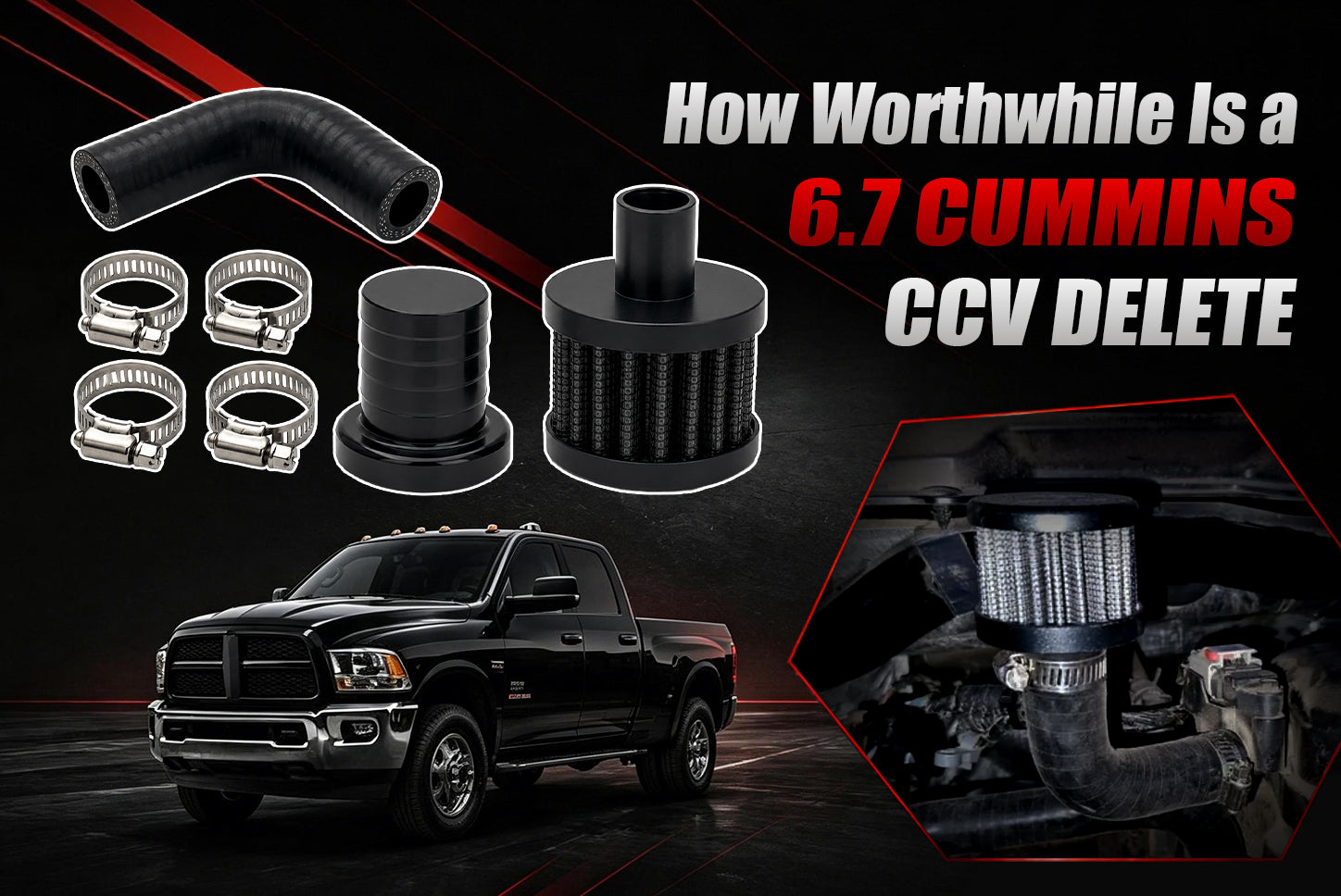
For the price of an oil change, the 2004-2010 LLY LBZ LMM Duramax PCV/CCV Reroute Kit gives your LBZ what it should have had from the factory: clean intake air and a crankcase that breathes freely without feeding the turbo an oil mist diet.

The LBZ earned its reputation as the classic Duramax for a reason. A half-hour PCV reroute is one of the few things that makes it better.
Find the right parts for your LBZ at www.dieseltok.com.
FAQ
Does a PCV reroute hurt my LBZ Duramax?
No. A vented PCV reroute removes oil mist from the intake tract, which helps the intercooler, turbocharger, and intake manifold stay clean. The engine breathes cleaner air and the crankcase ventilation pressure is unchanged. There is no measurable downside to the engine’s health or performance.
Will I fail emissions with a PCV reroute?
It depends on your state’s inspection requirements. A visual inspection that checks for modified emissions equipment may flag the reroute, since the factory PCV routing is technically part of the emissions control system. In states without diesel emissions testing, the reroute is effectively invisible and won’t affect an OBD-II plug-in test because there’s no PCV-related monitor.
How long does LBZ PCV reroute installation take?
30 to 60 minutes with basic hand tools. The LBZ’s PCV routing is simple and accessible from the top of the engine bay — no lift required. The only slightly tedious part is routing the vent hose securely away from hot exhaust components.
Does the reroute smell?
You may notice a faint oil vapor smell at idle if you’re standing near the front of the truck, particularly after a long pull when the crankcase is hot and blow-by is at its peak. Inside the cab, with the windows up, it’s undetectable. The odor is similar to a very mild version of what you smell when you open the oil fill cap with the engine running.
Can I use a catch can instead of venting to atmosphere?
Yes. A catch can does the same job — keeps oil out of the intake — while returning cleaned crankcase air to the intake tract. The trade-off is that a catch can requires periodic emptying, especially on an LBZ that tows heavy. A vented reroute is zero-maintenance.
Why is the LBZ specifically known for PCV reroutes?
The LBZ is the last pre-DPF Duramax and one of the most desirable Duramax engines ever built. It doesn’t need a DPF delete or DEF delete to run right, so the PCV system is one of the only factory design choices worth correcting. The reroute is unusually simple on the LBZ compared to later Duramax generations, and the classic status of the platform means there’s a large owner community actively seeking this information.
Does a PCV reroute affect turbocharger life?
Positively. The factory PCV routing feeds oil mist directly into the compressor inlet, where it coats the compressor wheel over time. This coating creates an uneven surface that reduces aerodynamic efficiency and can, in extreme cases, contribute to compressor surge at high boost. Keeping the compressor wheel clean and dry extends its service life.
What happens to the open port on the intake after the reroute?
It must be capped. The reroute kit includes a rubber or silicone cap sized for the LBZ’s intake duct port. An uncapped port creates an unmetered air leak after the MAF sensor, which confuses the ECM’s air-fuel ratio calculation and can cause a lean idle, hesitation, or a MAF correlation code.