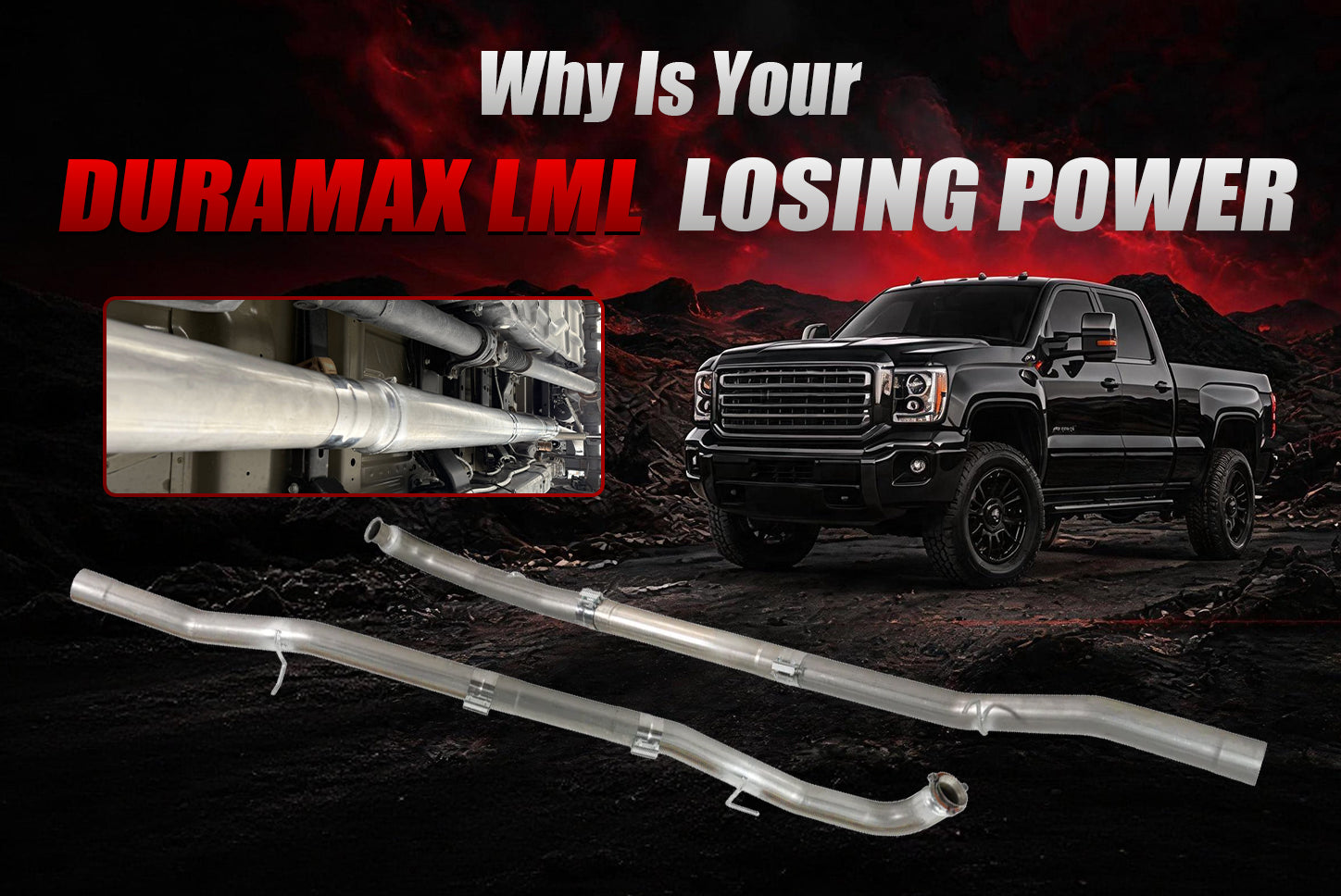

For heavy-duty diesel trucks powered by massive engines like the Ford Powerstroke, GM Duramax, or Ram Cummins, the exhaust system is a critical component that directly impacts performance, thermal regulation, and cabin safety. Over thousands of miles of heavy towing and intense heat cycles, factory exhaust plumbing takes a severe beating. High vibrations, road salt corrosion, and extreme temperature swings eventually lead to structural cracks, blown gaskets, and loose hardware clamps.
A compromised exhaust system does more than just produce an annoying ticking or hissing noise under load. Left unaddressed, chronic exhaust gas leaks cause a dangerous drop in turbocharger drive pressure, spike your Exhaust Gas Temperatures (EGTs), allow toxic fumes to seep into the passenger cabin, and choke your vehicle's overall operating efficiency. In this technical diagnostic manual, we will break down exactly how to identify, locate, and fix internal leaks before demonstrating how a heavy-duty diameter upgrade can restore your truck's long-term power potential.
The Hidden Dangers of Diesel Exhaust System Leaks
In a turbocharged diesel vehicle, the exhaust stream is the driving force that spins the turbocharger's turbine wheel to generate fresh intake boost. When an exhaust gas leak develops anywhere before or immediately after the turbocharger, it bleeds off crucial kinetic energy. This loss of pressure leads to a sluggish throttle response, extended turbo lag, and a noticeable drop in horsepower.
Behind-the-scenes high-pressure gas leaks also disrupt the fluid dynamics of the exhaust system. Furthermore, a severely damaged factory system not only impacts downstream emissions tracking sensors but can also trigger extreme backpressure spikes. Over time, restricted exhaust airflow forces your engine to run hotter and generate a higher thermal load during heavy hauling cycles, which accelerates internal component wear. By proactively hunting down physical leaks and replacing weak OEM pipes with industrial-grade connections, you can protect your engine valves from thermal fatigue and keep your truck delivering stable power under extreme loads.
Step-by-Step Diagnostic Guide: How to Find and Locate Leaks
Tracking down an elusive exhaust gas leak requires a systematic diagnostic approach. Because diesel soot can quickly coat everything under the hood, use these proven mechanical strategies to pin down the exact source of a failure.
1. The Visual Inspection and Soot Trail Search
The simplest way to spot an active gas leak is to search for fine, black carbon soot accumulation. Wait until the vehicle has cooled down completely, grab a high-powered flashlight, and inspect all major exhaust connections. Pay close attention to the exhaust manifold mating surfaces on the cylinder head, the turbocharger up-pipe bellows, the downpipe v-band clamps, and all welded hangers. Any area showing a localized dull black smudge or dark residue indicates an active pressure leak where hot exhaust gases are escaping past a failing seal or cracked weld.
2. The Shop-Vac Pressure Diagnostic Test
If a leak is microscopic or buried deep inside a tight engine bay, you can manually pressure-test the plumbing with the engine completely shut off. Take a standard household shop vacuum and insert the hose into the exhaust tailpipe exit. Use a micro-fiber shop rag or heavy-duty duct tape to wrap around the connection, creating a tight seal. Turn the vacuum cleaner to the "blow" setting to force constant, low-pressure air forward through the entire exhaust tract.
3. The Soap and Water Bubble Test
While the shop vacuum is continuously pressurizing the cold system from the tailpipe, mix a generous solution of liquid dish soap and warm water in a clean spray bottle. Spray the soapy mixture over every joint, flange connection, slip-fit joint, and flex-pipe bellow under the vehicle. If air is escaping from a hidden crack or a faulty gasket, the soap solution will instantly form dense, growing white bubbles. This incredibly accurate method allows you to identify precise failure points without risking burned fingers on a hot running engine.
Comprehensive Repair Steps: How to Fix Factory Exhaust Failures
Once you have pinned down the precise location of the leak, executing a durable, permanent repair ensures your truck regains its structural integrity.
-
Isolate and Cool: Park the vehicle on flat ground, engage the emergency brake, and let the entire system cool for at least one hour to prevent accidental thermal burns.
-
Fastener Preparation: Spray all rusted or seized exhaust bolts, nuts, and mounting clamps generously with a high-penetration oil solvent, allowing it to soak for fifteen minutes before attempting removal.
-
Component Teardown: Use heavy-duty metric sockets to unbolt the compromised section of pipe or failing flange, using a dead-blow mallet if necessary to break free stuck slip-fittings.
-
Surface Preparation: Use a wire brush, gasket scraper, or emery cloth to thoroughly clean the raw metal mating surfaces until they are smooth, silver, and completely free of old gasket material, rust flakes, and carbon crust.
-
Gasket and Pipe Replacement: Fit a fresh multi-layered steel gasket over the cleaned flange, or position your new high-quality replacement pipe section securely into the existing exhaust hangers.
-
Torque and Secure: Hand-thread all fasteners to ensure proper thread alignment, then use a calibrated torque wrench to tighten the hardware in an alternating star pattern to ensure even clamping pressure across the seal.
Elevate Your Truck's Performance: Premium High-Flow Upgrades
Fixing weak factory slip-joints with stock components often provides only a temporary patch. If your factory exhaust is rotting away or choking under heavy backpressure, upgrading to an oversized, premium aftermarket assembly is the ultimate way to eliminate future leak points while unlocking your engine's true torque potential. Let’s look at the absolute best application-specific high-flow upgrade solutions engineered to handle extreme working demands without using complex layout tables.
2011–2022 6.7L Ford Powerstroke 5-Inch Downpipe-Back Performance System
For Ford Super Duty trucks experiencing chronic exhaust restrictions, moving to an oversized diameter provides an immediate performance relief valve.

-
Premium Construction: Crafted from heavy-duty T-409 stainless steel to deliver superior long-term corrosion resistance and excellent structural durability.
-
Maximized Fluid Dynamics: Features a massive 5.0-inch downpipe-back exhaust profile engineered to provide maximum exhaust flow for competition and track applications.
-
Acoustic Configuration: Designed strictly for competition applications with no internal muffler, though an optional muffler assembly is available for owners seeking a quieter, more refined tone.
-
Core Efficiency Gains: Drastically reduces exhaust backpressure to optimize total volume flow, delivering a major boost to your engine's overall performance.
-
Vehicle Fitment List: Tailored to fit 2011–2022 Ford F-250, F-350, and F-450 6.7L Superduty pickup trucks; explicitly not suitable for Cab & Chassis platforms.
2017–2023 6.6L GM Duramax L5P 5-Inch Heavy-Duty Downpipe-Back System
The L5P generation produces massive heat under heavy loads. Upgrading to a specialized high-clearance assembly is vital to safeguarding your vehicle's engine bay temperatures.

-
Rugged Metal Composition: Manufactured from high-grade 409 stainless steel to handle intense thermal expansion and muddy road conditions.
-
Secure Flange Design: Built as a robust 5-inch downpipe-back layout utilizing an industrial-strength 4-bolt connection flange to prevent future exhaust leaks.
-
Thermal Regulation: Successfully reduces Exhaust Gas Temperatures (EGTs) across the board to promote optimal engine health and long-term durability.
-
Smooth Bungless Layout: Features an advanced engineering layout with zero sensor bungs, ensuring a completely smooth, unobstructed internal exhaust path.
-
Vehicle Fitment List: Fits 2017–2023 GMC and Chevy Duramax 6.6L 2500 and 3500 pickup models with the L5P engine; will not fit 3500, 4500, or 5500 Cab & Chassis medium-duty variants.
2019–2024 6.7L Ram Cummins 5-Inch Downpipe-Back Performance Exhaust
The high-torque inline-six Cummins engine demands a smooth, heavy-duty pathway to handle high boost pressures without developing structural weld cracks.

-
Long-Lasting Architecture: Constructed out of premium, high-strength stainless steel to guarantee long-term survival and exceptional structural longevity.
-
Zero Internal Turbulence: Designed with an engineered bungless configuration to guarantee a perfectly smooth, uninterrupted internal flow path.
-
Simplified Installation: Equipped with factory OE-style mounting hangers welded onto the piping to ensure a seamless, hassle-free installation process and an exact fit.
-
Heavy-Duty Track Focus: Formulated for maximum volume displacement, making it absolutely ideal for off-road and competition applications.
-
Vehicle Fitment List: Tailored precisely for 2019–2024 RAM 2500 and 3500 pickup trucks; explicitly not suitable for 2500 models equipped with factory air-ride or any Cab & Chassis variants.
Long-Term Maintenance & Total System Protection
When optimizing the total flow efficiency of your heavy-duty truck, it is crucial to recognize that your vehicle operates as a synchronized ecosystem. Upgrading to an industrial-strength, large-diameter exhaust system eliminates weak factory joints and drops dangerous thermal backpressure, which directly relieves strain on your turbocharger assembly. A cooler-running turbocharger translates to lowered oil degradation, cleaner air intake cycles, and extended life for your internal engine seals.
Conclusion
Detecting and repairing an exhaust leak early is one of the most critical steps in protecting your diesel truck from expensive mechanical breakdowns and sluggish towing performance. While basic repairs can temporarily patch failing OEM gaskets, upgrading your entire tract to an oversized, premium aftermarket layout is the definitive long-term solution. Replacing restricted factory piping with an industrial-strength 5-inch assembly allows your vehicle to breathe naturally, drops EGTs significantly, and unlocks a noticeable increase in power and fuel efficiency.
Do not allow a leaking flange or cracked factory bellow to choke your engine or contaminate your cabin air. Take proactive control of your truck’s reliability today. To find the perfect CNC-bent stainless steel pipes, robust 4-bolt connection flanges, and application-specific performance exhaust upgrades engineered strictly for your vehicle configuration, explore our complete selection over at www.dieseltok.com. Invest in the heavy-duty quality your truck deserves and experience complete peace of mind on the road.
FAQS
1. What are the most common signs that my diesel truck has an exhaust leak?
The most prevalent signs include a distinct ticking or hissing noise that increases in volume during acceleration, a sudden drop in turbo boost pressure, sluggish throttle response, and an unusual smell of diesel fumes inside the passenger cabin. Visually, an active leak will almost always leave behind a noticeable trail of dull, black carbon soot around the failing connection or cracked pipe joint.
2. Can I install a 5-inch downpipe-back exhaust system on a Cab & Chassis commercial truck?
No, you cannot. The premium aftermarket kits engineered for the 6.7L Powerstroke, 6.6L Duramax L5P, and 6.7L Cummins are designed strictly for standard consumer pickup truck platforms. Commercial Cab & Chassis trucks utilize an entirely different frame rail layout, a unique fuel tank positioning, and altered suspension clearance paths, meaning these standard pickup kits will not fit those medium-duty commercial models.
3. Why does a bungless exhaust layout improve system performance?
An exhaust system featuring a bungless design means that the internal walls of the piping are entirely smooth and free of sensor protrusion ports. By eliminating these mounting bungs, the exhaust gases enjoy a completely unobstructed, uninterrupted flow path. This drastic reduction in internal turbulence maximizes volume velocity, leading to enhanced engine efficiency and improved fuel economy at the pump.
4. How does upgrading to a 5-inch exhaust system help lower my truck's Exhaust Gas Temperatures (EGTs)?
Factory exhaust setups often feature restrictive diameters, tight crimps, and dense baffles that trap intense heat inside the engine bay. Upgrading to an open, oversized 5-inch downpipe-back configuration dramatically increases the available volume capacity of the exhaust path. This massive reduction in backpressure allows scorching-hot exhaust gases to escape the turbocharger turbine wheel instantly, directly lowering overall EGTs.
5. Will a 5-inch downpipe-back system fit a Ram 2500 model equipped with factory air-ride suspension?
No, it will not. The 2019–2024 Ram Cummins 5-inch system is explicitly not suitable for 2500 models featuring the factory rear air-ride suspension system. The large air bags and associated structural leveling brackets on those specific trucks occupy the exact clearance envelope required to route the massive 5-inch stainless steel tailpipe section safely away from moving suspension linkages.
6. What is the main structural benefit of T-409 stainless steel over aluminized steel?
T-409 stainless steel contains a significant percentage of chromium, which provides excellent long-term resistance to environmental corrosion, road salt, and moisture accumulation. While standard aluminized steel pipes can rust through over a few winters in harsh climates, high-quality stainless steel kits maintain their structural integrity and wall thickness, ensuring a highly durable upgrade built for longevity.
7. Does the 6.7L Ford Powerstroke 5-inch system include an internal muffler?
The standard 5-inch system for the 2011–2022 Ford Powerstroke is specifically engineered for competition and off-road tracking applications and features a straight-through layout with no internal muffler to ensure maximum flow. However, for truck owners who are seeking a slightly quieter, more refined, and deeper exhaust note, an optional matching high-flow muffler is easily available to tailor the sound profile.
8. Is custom computer tuning required after installing a downpipe-back exhaust system?
Yes, absolutely. A downpipe-back system completely replaces the factory exhaust tract located after the turbocharger downpipe. Because this modification removes factory emissions monitoring components, you must install matching custom electronic software tuning to your vehicle's Engine Control Module (ECM). Operating without proper software calibration will instantly trigger a hard check engine light and force your truck into a restrictive "limp mode."