
What P0401 Actually Means
P0401 is one of the most common check engine lights on diesel trucks with EGR systems. The code’s technical definition — “Exhaust Gas Recirculation Flow Insufficient Detected” — is about as helpful as a warning light that says “something’s wrong.”
Here’s what the ECM is actually seeing: it commanded the EGR valve to open a certain amount, it expected a corresponding change in manifold pressure, intake air temperature, or mass airflow, and the change never happened. The ECM knows how much exhaust should be flowing through the EGR circuit at a given throttle position and load. When that number doesn’t match reality, it throws P0401.
In plain English: your engine is trying to recirculate exhaust gas into the intake, and not enough is getting through. Something — carbon, a stuck valve, a cracked cooler, a blocked passage — is standing in the way.
5 Causes of P0401 on Diesel Engines
1. Carbon-Clogged EGR Valve
This is the #1 cause on every diesel platform. The EGR valve lives in the path of hot, sooty exhaust gas. Over thousands of miles, carbon deposits build up on the valve pintle, the seat, and the stem. Eventually the valve can’t open fully, or at all.
The symptom is predictable: P0401 appears, sometimes accompanied by slightly rougher idle or a faint loss of low-end throttle response. The fix is straightforward — remove the valve, clean it with carb cleaner and a brass brush, reinstall. On a 6.0L Powerstroke, this is a 15-minute job with two bolts. On an LML Duramax or 6.7L Cummins, it’s buried deeper and takes an hour.
Cleaning works if: the valve isn’t electrically damaged and the carbon is fresh. Cleaning won’t work if: the valve motor is burned out from fighting stuck carbon for months, or the carbon is baked into a ceramic-hard crust that’s fused the pintle to the seat.
2. Blocked EGR Cooler Passages
The EGR cooler is a heat exchanger — exhaust flows through small tubes surrounded by engine coolant. Those tubes are narrow by design, and they’re constantly exposed to diesel soot. Over time, carbon and sulfate deposits accumulate inside, progressively restricting flow until the ECM can’t measure enough exhaust reaching the intake.
On the 6.0L Powerstroke, the EGR cooler passage restriction is often compounded by a failing oil cooler that reduces coolant flow, causing the tubes to coke up faster. On the LML Duramax, the combination of high exhaust temperatures during regen cycles and factory Dex-Cool degradation accelerates cooler blockage.
A blocked EGR cooler won’t respond to valve cleaning. The cooler itself needs to be replaced or deleted.
3. Leaking or Cracked EGR Cooler
This one is deceptive because a cracked EGR cooler can produce symptoms that look like a flow restriction — low intake manifold pressure change when the EGR valve opens — but the root cause is a pressure leak, not a blockage.
When the cooler cracks, exhaust gas escapes before it reaches the intake. The ECM sees reduced flow and triggers P0401. The telltale signs that it’s a crack rather than a clog: you’ll also be losing coolant with no visible external leak, and you may see intermittent white smoke on cold starts.
This is most common on the 6.0L and LML platforms. The diagnostic step is a cooling system pressure test combined with a visual inspection of the EGR cooler hot-side inlet (accessible by pulling the EGR valve and using a bore scope).
4. EGR System Vacuum or Wiring Fault
Before diving into expensive parts, always check the basics. The EGR system relies on electrical signals and, on some platforms, vacuum lines. A broken wire at the EGR valve connector, a corroded pin, a blown fuse for the EGR circuit, or a cracked vacuum line (on vacuum-actuated EGR valves) will all produce P0401.
This is where a scan tool saves hours. Command the EGR valve open with the scanner while monitoring the actual position feedback. If the valve moves, the wiring is fine and the problem is mechanical. If it doesn’t move, check the circuit.
5. After a Recent EGR Delete Without a Tune
If you just physically removed the EGR cooler or blocked off the valve but haven’t loaded a tune that disables the EGR function, P0401 is guaranteed. The ECM is still expecting EGR flow and flagging it as missing.
This is not a problem with the delete — it’s a problem with the tune. Load a proper ECM calibration that disables EGR monitoring and clears the associated DTCs.
P0401 vs P0402 vs P0403 vs P0404: What Each Code Means
P0401 doesn’t exist in isolation. The EGR system has four core diagnostic codes, and knowing which one you’re dealing with changes everything.
P0401 — EGR Insufficient Flow. The system can’t achieve expected flow rates. Root cause is almost always mechanical: carbon buildup in the valve or cooler, a cracked cooler losing pressure, or blocked intake passages.
P0402 — EGR Excessive Flow. The opposite problem. The EGR valve is stuck open or not seating fully, allowing exhaust to flood the intake at idle and low load. Symptoms include rough idle, stalling at stops, and heavy black smoke. The fix is usually cleaning or replacing the EGR valve. On Duramax engines, P0402 often appears when carbon chunks physically hold the valve pintle off its seat.
P0403 — EGR Control Circuit Malfunction. This is an electrical problem, not a mechanical one. The ECM can’t communicate with the EGR valve’s motor or position sensor. Check the wiring harness, the connector pins, and the fuse before touching the valve itself. P0403 alone with no other codes almost never means the valve is bad — it means the circuit is broken.
P0404 — EGR Performance/Range Problem. The valve is moving, but not to the range the ECM commanded. On Duramax engines, this is the “death code” — the EGR valve is so carbon-packed that it can’t sweep its full travel range, and the dealer quote for replacement typically lands between $2,500 and $3,600. At that price point, deleting the EGR system entirely costs less than replacing the valve and leaves you with no valve to fail again.
The Diagnostic Sequence: What to Check First
When P0401 pops up, resist the urge to throw parts at it. Work through these steps in order, from free to expensive.
Step 1 — Scan for additional codes. P0401 rarely travels alone. If you also have P0403 or P0404, start with the electrical checks first. If you have P0401 by itself, proceed to the mechanical checks.
Step 2 — Visual inspection of the EGR valve connector and wiring. Unplug the connector at the EGR valve. Look for bent pins, green corrosion, or melted insulation. A three-minute visual check can save you from replacing a perfectly good valve.
Step 3 — Command the EGR valve with a scan tool. With the engine off, use a bi-directional scanner to command the valve through its full range. Listen for the motor. If it moves smoothly, the electrical side is healthy and the problem is carbon or the cooler. If it doesn’t move, you have an electrical or motor failure.
Step 4 — Remove and inspect the EGR valve. Two to four bolts depending on the platform. Look at the valve face and the intake port behind it. Dry soot is normal. Wet, sticky carbon that smells like coolant means the EGR cooler is leaking internally. Hard, crusted, baked-on carbon means the valve has been running hot and choking for a while. If the valve pintle is visibly damaged or the motor shaft is seized, replace the valve.
Step 5 — Pressure test the cooling system. Pump it to 15-16 psi and watch for 20 minutes. If the gauge drops and there’s no external leak, the coolant is going through the EGR cooler into the intake. This confirms a cracked cooler rather than a simple carbon restriction.
Step 6 — Bore-scope the EGR cooler inlet. With the EGR valve removed, snake a bore scope into the cooler inlet. Look for wet residue, white crust, or severe carbon restriction. This is the definitive visual confirmation.
Repair vs Delete: What Your Options Look Like
Once you’ve isolated the cause, your choices break down by what you found.
If the EGR valve is clogged but the motor is good: Remove it, clean it thoroughly with EGR-specific cleaner (not carb cleaner — it can damage the position sensor seals on some valves), and reinstall. Clear the code and drive. This is a $10 fix.
If the EGR valve motor is burned out: Replace the valve. Aftermarket EGR valves run $150-$350 depending on the platform. But before you order, do the math — on a Duramax, a delete kit costs roughly the same as a new valve and eliminates the entire failure point.
If the EGR cooler is blocked or cracked: You’re replacing or deleting the cooler. A replacement cooler runs $400-$700 for the part alone, plus 8-10 hours of labor on most platforms because the intake manifold has to come off. A delete kit runs $150-$400, takes the same labor, and permanently removes the failure point.
If you’re getting P0401 on a platform where the EGR cooler is a known serial failure, the delete is almost always the smarter long-term move. Replacing a cooler you know will fail again is renting time, not fixing a problem. Here’s what the delete looks like on the three platforms that trigger P0401 most often:
Powerstroke 6.0L (2003-2007) — This is the #1 P0401 platform. The EGR cooler sits downstream of a failure-prone oil cooler, meaning it starves for coolant flow on most trucks past 100,000 miles. Our 6.0L Powerstroke EGR Delete Kit removes the cooler and the valve together, replaces them with a straight intake pipe and coolant reroute, and eliminates two failure points in a single job. If the cooler alone is the culprit and the valve is still functional, the EGR Cooler Delete Kit is a lighter-touch option that targets just the heat exchanger.

Cummins 6.7L (2010-2024) — The 6.7L Ram EGR system has a throttle valve inline with the cooler, and both are prone to carbon packing at high mileage. A P0401 on this platform often means the cooler tubes are restricted, the throttle valve is coked, or both. Our 6.7L Cummins EGR & Throttle Valve Delete Kit removes the cooler and the throttle valve as a unit, simplifying the intake tract and eliminating the two most common P0401 triggers on the Ram platform.

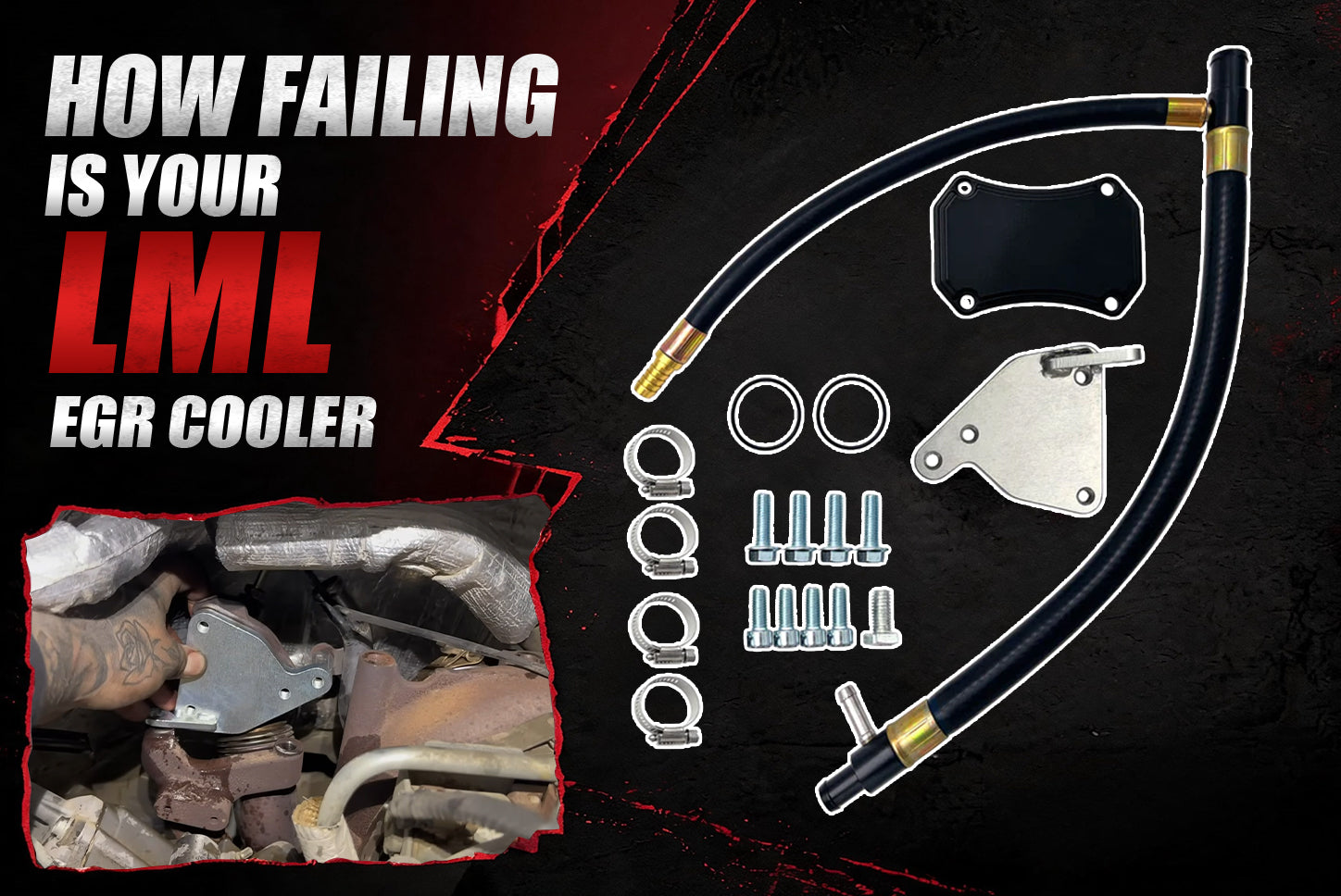
Duramax LML (2011-2016) — The LML’s EGR cooler fails differently than the 6.0L’s — it’s thermal fatigue cracking from aggressive regen cycles rather than simple carbon packing. But the result is the same: P0401 followed by coolant loss. A full EGR delete kit removes the cooler, valve, and associated plumbing, and with a proper tune, P0401 is permanently disabled as a monitor. On an LML with over 100,000 miles, the cost of a delete kit is typically less than half what a dealer charges to replace just the EGR valve alone.

Will the Code Come Back After Clearing It?
The answer depends on whether you fixed the root cause or just erased the symptom.
If you cleaned a carbon-clogged valve and the cooler passages are clear, the code should stay gone. The carbon will eventually return — that’s the nature of EGR systems — but you’ll typically get months or years of driving before P0401 reappears.
If you cleared the code without addressing the cause — just hit “clear DTCs” and hoped for the best — P0401 will return within one to three drive cycles. The ECM runs EGR flow rationality tests periodically, not constantly, so it can take a couple of trips before the monitor runs and flags the fault again.
If you deleted the EGR system and loaded a proper tune, P0401 is permanently disabled as a monitor. It won’t come back. If you deleted the hardware but didn’t tune, the code will reappear immediately on the next drive cycle.
One important note: on trucks that require emissions testing, a cleared P0401 that hasn’t completed its readiness monitors will fail an OBD-II plug-in test even if the CEL is off. The EGR monitor needs to run and pass. If you’re in an emissions-testing area and you’ve deleted the EGR system, this is a deeper conversation about tuning and monitor readiness that goes beyond what a code scanner can solve.
Conclusion: Don’t Just Clear It
P0401 is a symptom, not the problem. The ECM is telling you that the EGR system can’t flow enough exhaust gas. Whether that’s carbon, a cracked cooler, a dead valve motor, or a wiring fault — the code won’t fix itself, and clearing it without a repair just delays the inevitable.
The diagnostic sequence above will tell you what’s actually wrong without guessing. And if what’s wrong is an EGR cooler on a 6.0L Powerstroke or an EGR valve on a high-mileage Duramax, a delete kit often costs less than the replacement part and solves the problem permanently.
Whether your P0401 is coming from a carbon-packed 6.0L cooler, a cracked LML heat exchanger, or a coked-up Cummins throttle valve, the fix that doesn’t come back is the same across all three platforms: remove the failure point entirely. Find the right EGR delete kit for your truck at www.dieseltok.com.
FAQ
What is P0401 on a diesel truck?
P0401 means “Exhaust Gas Recirculation Flow Insufficient Detected.” The ECM commanded the EGR valve to open and expected a corresponding change in intake airflow or manifold pressure, but the measured change was smaller than expected. On a diesel, the root cause is almost always carbon buildup in the EGR valve or cooler, a cracked EGR cooler leaking pressure, or an electrical fault in the valve circuit.
Can I drive with a P0401 code?
Short distances, yes — the truck will typically run fine at normal speeds since the EGR valve mostly operates at part-throttle cruise. The risk is long-term: a clogged EGR cooler that triggered P0401 today may be on the verge of cracking, which sends coolant into your intake and can hydrolock the engine. If you’re also losing coolant, park it until you diagnose the cooler.
How do I clear a P0401 code permanently?
Fix the root cause. If the EGR valve is carbon-clogged, remove and clean it. If the EGR cooler is blocked or cracked, replace or delete it. Simply clearing the code with a scan tool will temporarily turn off the check engine light, but the ECM will re-run the EGR flow monitor within one to three drive cycles and the code will return.
Is P0401 the same as a bad EGR valve?
Not always. A carbon-clogged EGR valve is the most common cause, but P0401 can also be triggered by a blocked EGR cooler, a cracked cooler leaking exhaust pressure, broken wiring or a corroded connector at the valve, or a tune issue after an incomplete EGR delete. Always run the diagnostic sequence — don’t order a valve before you’ve confirmed that’s the problem.
What’s the difference between P0401 and P0404?
P0401 means the EGR system can’t achieve enough flow — the problem is upstream of the flow measurement, typically in the valve, cooler, or exhaust pickup. P0404 means the EGR valve can’t move through its commanded travel range — the valve itself is seized, packed with carbon, or its position sensor has failed. On Duramax engines, P0404 is often a terminal diagnosis for the EGR valve, with dealer repair quotes reaching $3,600 or more.
Does a P0401 code affect fuel economy or performance?
Slightly. When the ECM detects insufficient EGR flow, it may adjust fuel and timing strategies to compensate, which can marginally reduce fuel economy and low-end throttle response. The bigger concern isn’t the immediate performance impact — it’s what the code is telling you about the health of your EGR cooler. A cracked cooler leaking coolant into the intake is a far more expensive problem than a drop in MPG.
How much does it cost to fix a P0401 code?
It ranges from $10 (a can of EGR cleaner and a Saturday morning) to $3,600 (a dealer EGR valve replacement on a Duramax) to $150-$400 (a DIY EGR delete kit). The cost depends entirely on which component is responsible and how far the damage has progressed. The diagnostic steps above are designed to identify the cause before you spend anything.
Will a tune fix a P0401 code?
A tune that disables the EGR function and associated DTCs will prevent P0401 from appearing, but only if the underlying mechanical problem isn’t actively damaging the engine. If your EGR cooler is cracked and leaking coolant, tuning out the code doesn’t stop the leak — it just turns off the warning light while coolant continues entering your intake. Fix the mechanical problem first, then tune.