
Why the LML EGR Cooler Is a Known Weak Point
The LML Duramax (2011–2016) marked a major emissions overhaul for GM’s diesel platform. To meet tightening EPA standards, the LML got a ninth fuel injector in the exhaust stream, a diesel particulate filter that runs hot and often, and — most critically — a redesigned EGR cooler that operates under far more thermal stress than its LBZ and LMM predecessors.
The problem boils down to three design realities:
First, the LML’s EGR cooler sits in the hottest part of the exhaust stream. Earlier Duramax EGR coolers drew exhaust from a lower-temperature pickup point. The LML pulls directly from the passenger-side exhaust manifold, where gas temperatures can exceed 1,200°F during a regen cycle. The stainless steel cooler tubes cycle between ambient and extreme heat hundreds of times in a single regen event — and every cycle adds microscopic fatigue.
Second, the LML’s active regeneration strategy constantly bakes the cooler. The ninth injector fires raw diesel into the exhaust to spike DPF temperatures past 1,000°F for soot burn-off. That heat pulse travels backward through the EGR circuit, subjecting the cooler to thermal shock that the LBZ and LMM simply never experienced. Over 100,000 miles of regens, the cumulative damage is unavoidable.
Third, GM’s factory coolant isn’t helping. The OEM Dex-Cool formulation is prone to forming silicate deposits in the EGR cooler’s narrow tube passages. Once flow is restricted — even partially — localized hot spots develop along the tube walls. These hot spots become stress risers, and eventually, cracks propagate straight through the tube wall.
The result is a failure mode unique to the LML: tiny, hairline cracks that open and close with temperature, making them nearly impossible to detect at idle but lethal at highway load.
5 Signs Your LML EGR Cooler Is Failing
1. Coolant Disappearing With No Visible Leak
This is the most common first symptom. You’re adding coolant every few weeks, but there’s no puddle under the truck and no wet spots on hoses or the water pump. The coolant is exiting through the EGR cooler, entering the intake manifold as vapor, and burning in the cylinders.
A healthy LML should hold its coolant level between oil changes with zero top-offs. If you’re adding more than a pint per 1,000 miles with no external leak, the EGR cooler is suspect number one.
Quick check: Mark the cold level on the surge tank with a Sharpie. Drive a full tank of fuel without towing. Check again cold. Any drop is an internal leak.
2. White Smoke That Comes and Goes
Unlike a blown head gasket, which typically produces steady white smoke, an LML EGR cooler with hairline cracks often produces intermittent smoke — heavier on cold starts after the truck sat overnight, lighter or nonexistent once the cooler tubes expand and partially seal the cracks at operating temperature.
The smoke will smell sweet, like syrup or burnt marshmallows. Normal diesel exhaust has a sharp, acrid smell. If your cold-start exhaust smells like a cotton candy machine, that’s glycol.
3. Unexplained Overheating During Regen or Towing
The LML’s cooling system is robust when it’s sealed. Once the EGR cooler cracks, two things happen simultaneously: combustion pressure enters the cooling system, and coolant exits into the intake. The first over-pressurizes the system past the cap’s relief rating. The second reduces the total coolant volume available.
The symptom is a temperature gauge that climbs during sustained load — highway grades with a trailer, or mid-regen on a hot day — then drops back quickly once you back out of the throttle. This is the cooling system struggling to manage heat with reduced capacity and combustion gas contamination.
4. Surge Tank Puking or Milky Residue Under the Cap
Open the surge tank cap when the engine is stone cold. Look at the underside of the cap and the inside of the tank neck. A healthy system shows clean, colored (orange or red) coolant and a clean cap. Signs of trouble:
- White, milky residue on the underside of the cap
- Brown or black specks floating in the coolant
- A strong exhaust smell when you sniff the open tank
- Dried coolant streaks running down the outside of the tank from the overflow port
That last one — dried coolant streaks from the overflow — means the system has been venting under pressure. On an LML, combustion gas in the cooling system is either a head gasket or an EGR cooler. Don’t guess which one; diagnose it.
5. EGT Sensor Readings That Don’t Make Sense
If you monitor EGT (Exhaust Gas Temperature) with a scan tool or gauge, a failing EGR cooler can produce readings that fluctuate erratically at steady-state cruise. This happens because coolant droplets hitting the EGT probe cause instantaneous temperature drops that the sensor reads as noise.
This is a less common tell and requires a data-capable scan tool, but if you’re already monitoring temps, it’s a valuable early-warning signal before the coolant loss becomes obvious.
LML vs Other Duramax: Why the EGR Cooler Fails Differently
If you came from an LBZ or LMM, you might assume the LML’s EGR cooler fails the same way. It doesn’t.
The LBZ and LMM EGR coolers tend to fail from progressive clogging — soot and carbon accumulate inside the tubes until flow is restricted enough to cause a slow, steady coolant leak. The failure is gradual, and the symptoms build over months.
The LML’s EGR cooler tends to fail from thermal fatigue cracking. A regen event pushes tube temperatures from roughly 400°F to over 1,200°F in seconds, then back down just as fast. The rapid expansion and contraction creates stress fractures that propagate from the inside of the tube wall outward. Unlike a clogged cooler that seeps, a cracked LML cooler can go from “fine” to “losing a gallon in 50 miles” in a single heavy-tow trip.
This matters for diagnosis because the standard pressure test — pumping the cooling system to 15 psi at the shop — can miss an LML cooler crack. The crack often only opens under negative intake pressure (vacuum in the intake manifold) combined with high exhaust gas temperature. A cold pressure test won’t replicate those conditions.
The Diagnostic Sequence: Ruling Out the Alternatives
Before you condemn the EGR cooler, rule out the other things that mimic its symptoms on an LML. Here’s the order to work through:
Step 1 — Visual inspection. Check every hose connection, the water pump weep hole, the radiator end tanks, and the heater core connections. An external leak is always the easiest fix. If you find one, fix it first and re-test before moving on.
Step 2 — Pressure test the cooling system cold. Pump it to 15–16 psi and watch for 20 minutes. If the gauge holds steady and you still see no external leaks, the loss is internal.
Step 3 — Check for combustion gas in the coolant. Use a combustion leak detector kit (the blue liquid that turns yellow). Run the engine with the surge tank cap off and test the vapor in the tank neck. A positive result means combustion gas is entering the cooling system — but it doesn’t tell you whether the path is a head gasket or the EGR cooler. A negative result at idle doesn’t rule out an EGR cooler crack that only opens under load.
Step 4 — If your scanner supports it, disable EGR flow and road test. A tuner or scan tool that can command the EGR valve closed temporarily is the single best diagnostic. Close the valve, drive the truck under load long enough to normally trigger symptoms, and watch your coolant level. If coolant loss stops with EGR flow disabled, the cooler is your culprit. If it continues, suspect head gaskets.
Step 5 — Pull the EGR valve and bore-scope the cooler. With the EGR valve removed (two bolts, accessible from the top of the engine), you can look directly into the cooler’s hot-side inlet with a bore scope. Wet, shiny residue or white crust on the tube openings confirms coolant is entering the exhaust gas path.
Repair or Delete: The Real-World Decision
Once you’ve confirmed an LML EGR cooler failure, you have two practical options. There is a third — do nothing — but that leads to the death spiral covered in our other article, and the ending is always the same: head gaskets, contaminated oil, or a hydrolocked cylinder.
Option A: Replace the EGR Cooler
Replacing the LML EGR cooler with an OEM or upgraded aftermarket unit preserves the factory emissions configuration. The part itself runs $400–$700. Labor is substantial — the LML’s EGR cooler is buried under the intake manifold and the EGR plumbing, and the job typically takes 8–10 hours at a shop.
Total cost with labor: $1,500–$2,500.
The real question isn’t the cost — it’s whether the replacement will last. A new OEM cooler is the same design exposed to the same thermal cycling. If you’re past 100,000 miles and your regen frequency is already creeping up due to DPF ash loading, you’re installing a new cooler into a system that’s getting harder on it every mile.
If you go this route, do three things at the same time: replace the coolant with an EC-1 rated ELC, install a coolant filtration system, and replace the thermostat. These three steps give the new cooler the best shot at a full service life.
Option B: Delete the EGR Cooler
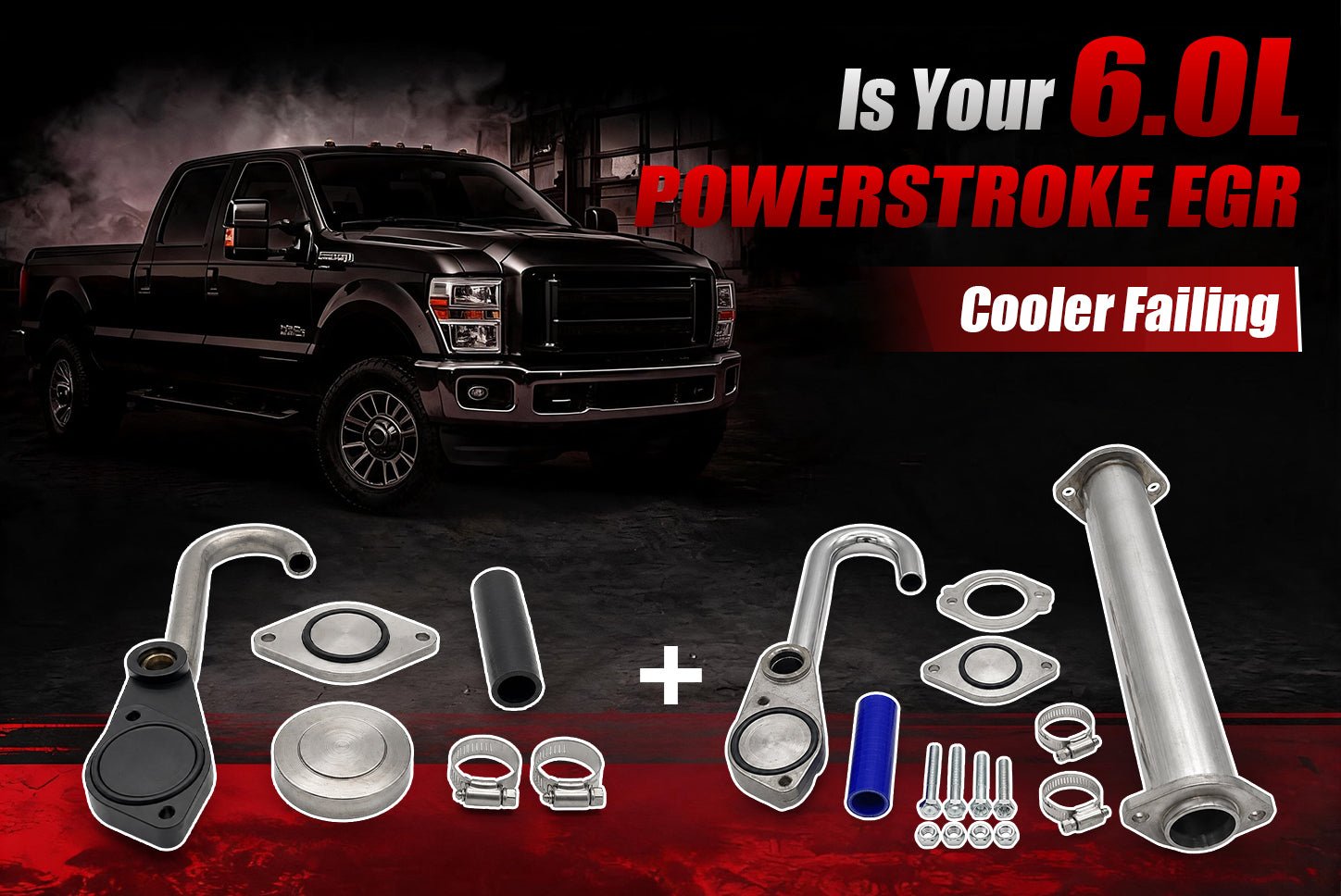
Removing the EGR cooler eliminates the failure point entirely. The job requires an EGR delete kit (cooler delete pipe that replaces the cooler in the exhaust path, plus a coolant line reroute), a tune to disable the EGR function and related DTCs, and the same 8–10 hours of labor.
Parts cost: $150–$400 for the delete kit. With tuning, total out-the-door cost typically lands between $800 and $1,500 — roughly half of a replacement, and without the risk of doing it again in 50,000 miles.
The trade-off is straightforward: you lose the factory EGR function, which means the truck is no longer emissions-compliant. For a truck that’s out of warranty and you plan to own long-term, deleting the EGR cooler is the more permanent solution.
If You Delete, What Else Should You Address?
Deleting the LML EGR cooler puts you into a job where the intake manifold, EGR plumbing, and coolant lines are already apart. Several other components are right there, and doing them now saves duplicating labor later.
Must-Do: Replace the Thermostat
The LML’s thermostat sits in the same coolant circuit that feeds the EGR cooler. It’s a $40 part buried under hoses that are already disconnected. Replace it.
Must-Do: Coolant Flush and Upgrade
Drain the Dex-Cool completely and refill with an EC-1 rated extended-life coolant like Shell Rotella ELC or CAT ELC. These formulations don’t degrade into the silicate sludge that clogs passages, and they have a service life of 500,000+ miles with proper filtration.
Highly Recommended: Coolant Filtration System
The LML engine block is sand-cast, and residual casting sand circulates in the coolant for the life of the truck. A coolant bypass filter catches this debris before it can settle in the heater core, radiator, or (in a non-deleted truck) the replacement EGR cooler. This is a $150 part that installs in an hour and pays for itself in radiator and heater core life.
Worth Considering: PCV Reroute
With the intake tract already open, rerouting the PCV system to a catch can or open breather keeps oil vapor out of the intercooler and intake manifold. This isn’t directly related to the EGR cooler but shares the same workspace. A PCV reroute kit runs $100–$200 and takes 30 minutes with the intake already off.
Worth Considering: Intake Elbow and Bridge Kit
The LML’s factory intake elbow and bridge are plastic and prone to cracking at the mounting flange, especially after multiple removal cycles. If yours has been on and off a few times or shows stress marks at the bolt holes, replacing it with a billet aluminum Intake Elbow and Bridge Kit while the intake is apart eliminates a future boost leak before it starts.
What Happens If You Keep Driving With a Failing Cooler
The damage doesn’t stay contained to the cooler. Here’s how it progresses on an LML:
-
First month. Coolant loss accelerates. You’re adding coolant weekly. Combustion byproducts are now circulating through the entire cooling system, attacking gaskets and seals throughout the engine.
-
Second month. The constant over-pressurization from combustion gas begins stressing the head gaskets. The LML uses multi-layer steel head gaskets that are tough, but not immune to sustained pressure cycling. You’ll notice the surge tank puking more often, and the cabin heater may start blowing lukewarm air as air pockets accumulate.
-
Third month and beyond. The head gaskets fail. Combustion pressure now crosses the fire ring into the cooling jacket on every power stroke. The engine overheats rapidly under any load. Coolant enters the oil through the failed gasket seal, turning the oil into milkshake. At this point, you’re doing head gaskets — a $3,500–$5,000 job — on top of whatever you do with the EGR cooler.
The cost difference between catching an EGR cooler failure early and waiting until it takes the head gaskets with it is roughly a factor of five. The early fix is a delete kit and a weekend. The late fix is a tow truck and an engine teardown.
Conclusion: Test It Before It Tests Your Head Gaskets
The LML EGR cooler isn’t a maintenance item — it’s a wear item with a fuse. And on a truck with 100,000-plus miles and years of regen cycles behind it, that fuse is getting short.
If you’re losing coolant with no external leak, don’t assume it’s “normal for a diesel” or “probably just a small leak somewhere.” Diagnose it. The diagnostic sequence above will tell you whether it’s the EGR cooler, and the repair-or-delete decision comes down to how long you plan to keep the truck.
For long-term owners, an EGR cooler delete is the fix that doesn’t come back. Grab our LML Duramax EGR Delete Kit for a complete delete solution, and pair it with a coolant filtration system and PCV reroute while you’re in there — your LML will run cleaner, cooler, and with one less failure point waiting to strand you.Visit our store at www.dieseltok.com now!

FAQ
What are the most common symptoms of an LML Duramax EGR cooler failure?
The most common signs are disappearing coolant with no visible external leak, intermittent white exhaust smoke that smells sweet, unexplained overheating during towing or regen cycles, and coolant residue around the surge tank overflow. On an LML specifically, the symptoms can come and go because the cooler cracks are often thermal — they open under high heat and partially seal when the engine cools.
Why does the LML EGR cooler fail more often than earlier Duramax engines?
The LML’s active regeneration system exposes the EGR cooler to extreme thermal cycling that the LBZ and LMM never experienced. The ninth injector fires raw fuel during regen, pushing exhaust temperatures past 1,200°F. The EGR cooler tubes expand and contract with every regen cycle, and over tens of thousands of cycles, the stainless steel develops fatigue cracks. The LBZ and LMM typically failed from soot clogging, not thermal shock.
Can I drive my LML with a leaking EGR cooler?
Short distances at low load, maybe — but it’s a gamble. A small crack can propagate to a full rupture during one hard pull or regen event, dumping enough coolant into a cylinder to hydrolock the engine on the next start. Worse, sustained combustion pressure in the cooling system will eventually compromise the head gaskets. The risk isn’t just inconvenience; it’s escalating engine damage that multiplies the repair cost every week you wait.
How do I test an LML EGR cooler without removing it?
The most reliable non-invasive test is to temporarily disable EGR flow (using a scan tool or tuner that can command the EGR valve closed), then drive the truck under the conditions that normally cause coolant loss. If the loss stops with EGR disabled, the cooler is leaking. A cooling system pressure test at 15 psi can catch larger cracks, but it often misses the hairline thermal cracks that only open under operating conditions. A combustion leak detector on the surge tank can confirm combustion gas is entering the coolant, though it won’t differentiate between an EGR cooler leak and a head gasket failure.
How much does it cost to fix an LML EGR cooler failure?
Replacing the cooler runs $400–$700 for the part plus 8–10 hours of labor, for a total of roughly $1,500–$2,500 at a shop. Deleting the cooler costs $150–$400 for the delete kit, plus tuning ($300–$600) and labor ($800–$1,200), bringing the total to $800–$1,500. Deletion is both cheaper up front and permanent — there’s no cooler left to fail again.
Does deleting the LML EGR cooler cause any reliability issues?
No. The EGR system exists solely to reduce NOx emissions by recirculating inert exhaust gas into the combustion chamber. It provides no benefit to engine durability, fuel economy, or power output. Deleting it removes a failure point and actually benefits the engine by eliminating a source of intake air heat and contamination. The parts that matter for reliability — the cooling system, oil system, and rotating assembly — are completely unaffected.
Can I just block off the EGR cooler instead of fully deleting it?
Block-off plates prevent exhaust from entering the cooler, but they don’t solve the problem. The cooler still holds coolant, it’s still connected to the cooling system, and if it already has cracks, coolant can still leak into the intake. A proper delete removes the cooler from both the exhaust and coolant circuits entirely, replacing it with a pipe that carries neither exhaust nor coolant.
Do I need a tune after deleting the LML EGR cooler?
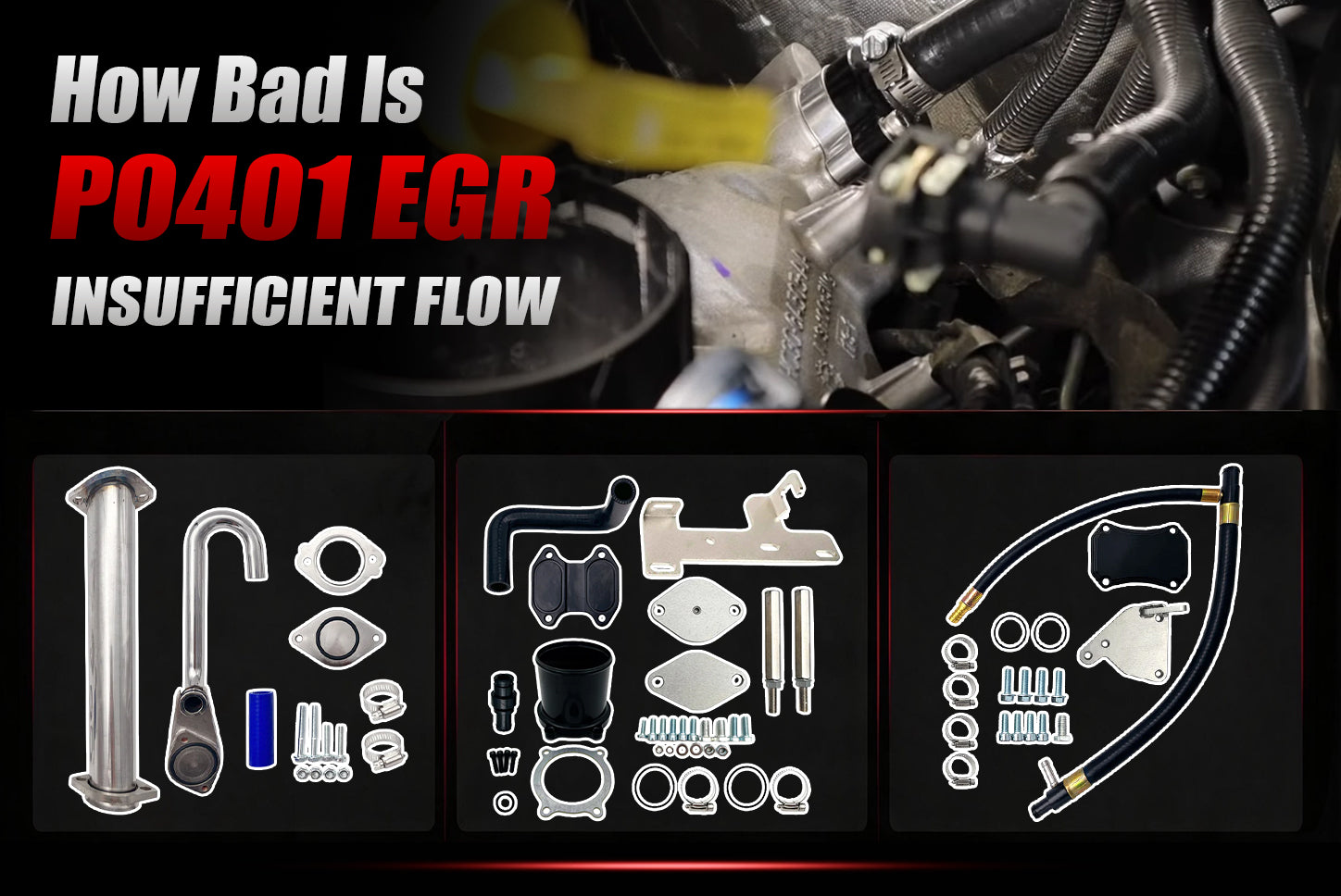
Yes. Without a tune to disable the EGR function, the ECM will detect insufficient EGR flow and trigger a check engine light (typically P0401). The truck will run, but you’ll have a persistent CEL and the ECM’s fuel and timing strategies may not be optimized without the EGR feedback it expects. A proper tune disables the EGR function, clears the related DTCs, and adjusts fueling for the now-cleaner intake air charge.