
When that familiar warning light on your LML Duramax dashboard lights up again, or you feel a noticeable drop in power response, you’ve likely already scoured forums and social media groups. The information you find about the EGR (Exhaust Gas Recirculation) system is often divided: one side calls it “the cancer of the engine,” advocating for complete deletion; the other sees it as an “environmental red line,” warning that any modifications come with serious risks. What’s the truth? As a rational vehicle owner, how can you cut through the noise and make the most responsible decision for your truck?
This article is not intended to make decisions for you, but rather to provide you with a clear decision-making framework, to clear up the confusion and help you find your own answers.
Understand the Technical Reality
The Design Purpose and Side Effects of the EGR System:
The EGR system works by reintroducing a portion of exhaust gases into the intake, lowering combustion temperatures to effectively reduce nitrogen oxide (NOx) emissions. However, this “recycled gas,” laden with soot and exhaust, brings well-known side effects:
Core Issue:
Builds stubborn carbon deposits inside the intake manifold, intake valves, and the EGR cooler.
Chain Reaction:
- These deposits reduce intake efficiency and lead to incomplete combustion, which can result in decreased power and increased fuel consumption.
- More seriously, coolant can enter the cylinders, potentially causing catastrophic hydro-lock.
What an LML EGR Delete Kit Actually Does:
A complete LML EGR delete kit performs two core functions:
- Physically: Blocks the path for exhaust gas recirculation.
- Via Tuning : Disables related sensor monitoring and fault codes, allowing the ECU to adapt to the new operating conditions.
Direct Result: Permanently eliminates the carbon buildup, failures, and potential risks caused by the EGR system itself. The engine breathes clean air, and combustion temperatures return to their designed normal state.
Important Clarifications:
-
It does NOT "fix" pre-existing damage: If the EGR is already leaking or the engine has suffered damage, the delete kit is only part of the solution, Existing faults must be addressed first.
-
It is NOT a "magic performance pill": Improvements in power and fuel economy primarily come from restoring the engine to its intended state, not from creating massive gains out of thin air. Its core value lies in "restoration" and "prevention."
Evaluate Practical Constraints
Technical feasibility is just the starting point. The rules of the real world are equally important.
Legality & Compliance
This varies widely by location. In some areas, only tailpipe emission numbers matter for testing; in states with strict emissions enforcement (like California), visual inspection alone will likely cause a failure.
You need to research:
Your local and state regulations: Penalties range from fines to failing mandatory vehicle inspections.
Long-Term & Hidden Risks:
- Inspection Headaches: Even if you pass now, future policy tightening creates uncertainty.
- Impact on Resale Value: A vehicle with a documented major emissions delete may face legal issues and buyer skepticism when selling.
When Should You Genuinely Consider an EGR Delete?
Consider this option only if one or more of the following strongly applies to your situation:
Calculated Risk Management Strategy
The pickup insurance is about to expire. To renew the policy, a vehicle with a "known modification status" is used for the insurance coverage of the next period.
Important Consideration
If an accident occurs and the EGR delete is determined to be a contributing factor, your insurer may have grounds to deny the claim or reduce the payout.
Your Truck is Already "Sick" and Keeps Relapsing
- Symptoms: The EGR fault light returns repeatedly, and the problem comes back soon after cleaning or repair.
- The Reality: The system is in a state of irreversible decline. The delete becomes a permanent fix to stop endless repair bills.
Your Truck is a "Money-Maker" and Can't Afford Downtime.
- Scenario: Used for constant heavy towing, long periods of idling on job sites, or operating in high-dust environments.
- The Goal: Eliminating a known reliability weak point under severe conditions to guarantee uptime and avoid costly breakdowns.
You Plan to Keep the Truck for 10+ Years
- Prerequisite: You have clearly assessed all risks (insurance, inspections, resale).
- The Mindset: This is a preventive investment. A single, known cost now buys freedom from all future EGR-related repairs and risks.
Tips for Choosing the Best LML EGR Delete Kit
Prioritize Material Quality:
Opt for kits made from T409 or T304-grade stainless steel. These materials offer excellent high-temperature resistance and corrosion protection.
Ensure Kit Completeness:
Choose a kit that includes all necessary components to avoid delays or extra costs during installation. A comprehensive kit should typically contain:
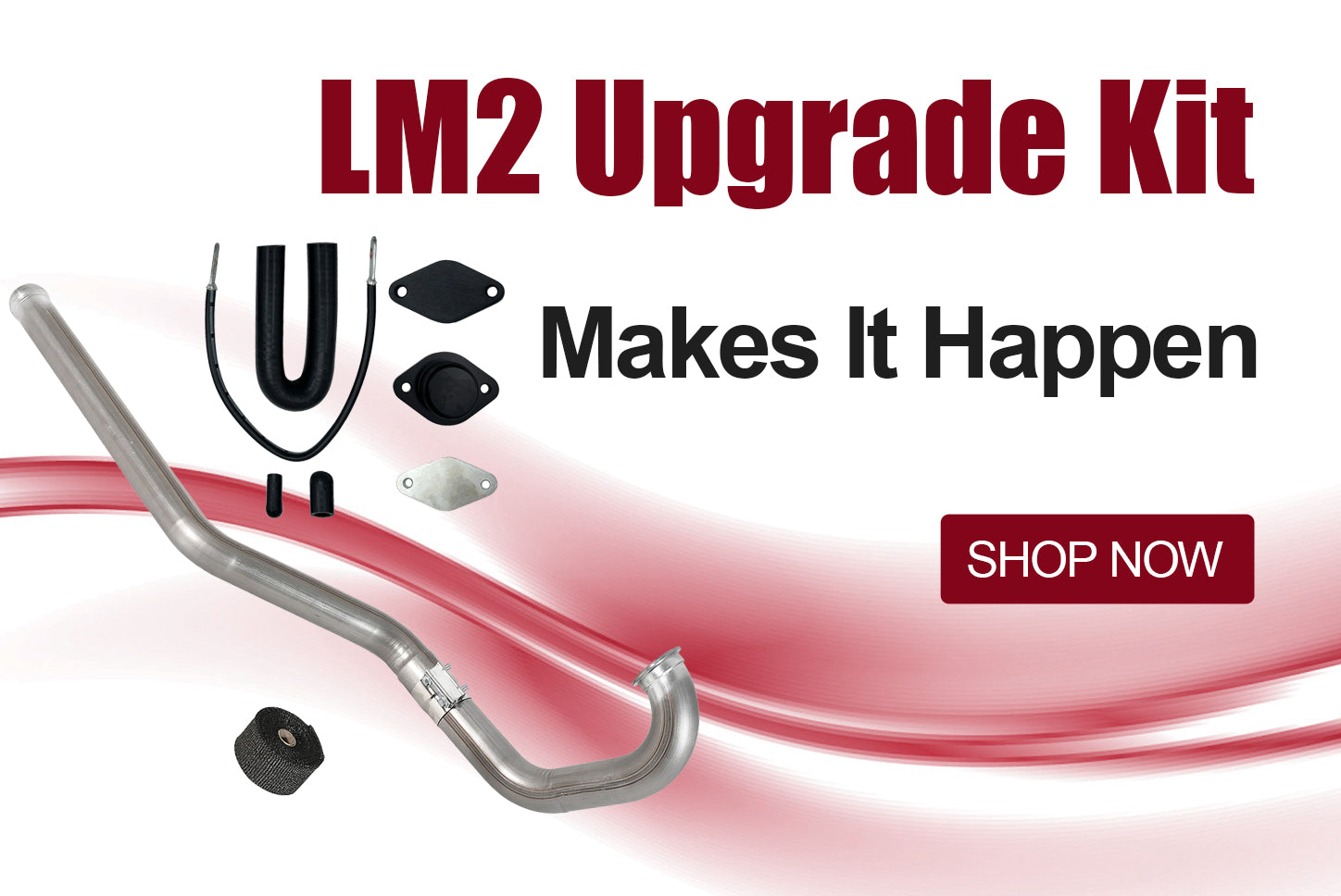
- Block-off plates (for the EGR valve and cooler ports)
- EGR delete up-pipe (replaces the factory pipe connecting to the EGR system)
- Coolant bypass hoses (to maintain proper coolant flow after cooler removal)
- All required installation hardware (gaskets, bolts, clamps)
- Any vehicle-specific parts for your model year and configuration
Verify Model Compatibility:
Double-check that the kit is explicitly listed as compatible with your truck's specific model year.
Consider Brand Reputation & Support:
Select a kit from a reputable brand with positive user feedback. Look for clear installation instructions and reliable product warranties.
One-stop Solution Designed for LML Duramax
After fully understanding the technical nature of EGR and carefully evaluating the regulations, inspections, and long-term risks, if you determine that deleting the EGR is the optimal solution for your specific situation, the key question shifts from "whether to do it" to "how to do it correctly."
2011-2016 6.6L Chevy Duramax LML EGR Valve Cooler Delete Kit
Our LML EGR Valve Cooler Delete Kit is engineered based on a deep understanding of the Duramax engine and the real-world needs of countless truck owners.

Core Advantages
-
Fully deletes the EGR system, permanently eliminating related fault codes, carbon buildup, coolant leaks, and potential hydro-lock risk.
-
Experience quicker turbo response and lower exhaust gas temperatures (EGTs), resulting in smoother driving and improved fuel economy and engine longevity.
-
Key components are constructed from stainless steel and cast aluminum, offering superior strength, heat resistance, and corrosion resistance compared to factory parts.
-
Coolant circulates faster, effectively reducing overall system operating temperature and providing extra protection under heavy loads.
2015.5-2016 6.6L Duramax LML 4" DPF & CAT Delete Pipe & EGR Cooler Delete Kit
Designed for owners seeking full emissions system optimization and maximum power response, our 4" DPF & CAT / EGR Delete Kit not only solves EGR issues but also removes the core restrictive components of the exhaust after-treatment system.

Core Advantages
-
Removes both the EGR and DPF system in one go—eliminating soot buildup and backpressure for completely unrestricted exhaust flow.
-
Includes a 4“ DPF & CAT delete pipe made from T-409 stainless steel, designed for race-grade flow and significantly improved power response.
-
All welds are pressure-tested and TIG-welded to ensure absolute sealing and long-term reliability.
-
This combo kit fits only models equipped with a 3-bolt flange and will not work on trucks with a V-band clamp at the turbo downpipe.
How It Matches Your Decision Criteria
-
Superior Materials: The combination of stainless steel and forged aluminum offers the ideal balance of lightweight construction and extreme durability.
-
Complete Kit, Easy Installation: Includes all necessary hardware and a detailed illustrated manual for a true plug-and-play experience.
-
Precise Compatibility: Ensures stable engine operation and protects the long-term health of the turbo and powertrain.