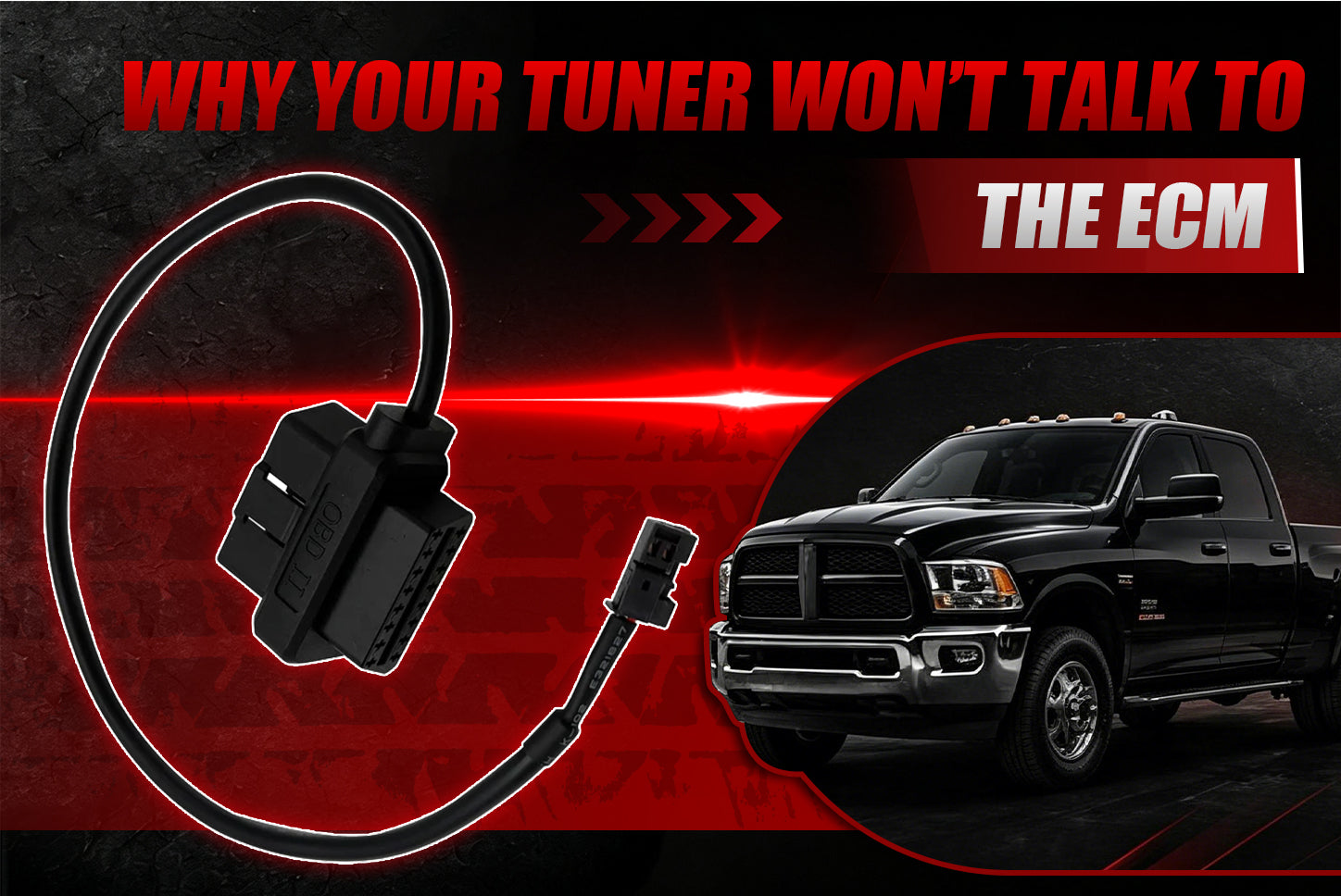

Deleting the DPF and DEF system on an L5P Duramax is a mechanical job — remove the filter, remove the injection nozzle, bolt in the delete pipe. The electrical side of the job is where it quietly goes wrong.
When you unbolt the emissions hardware, the NOx sensors, DEF tank module, and exhaust temperature probes are still plugged into the wiring harness. Remove those sensors, and the connectors are left dangling. The instinct is to zip-tie them out of the way and move on. The problem is that those connectors are not passive wiring — they are nodes on a CAN-BUS network, and every node you remove without proper termination drags the network toward an electrical fault. On the 2020-2023 L5P specifically, one of those nodes shares a bus with your fuel gauge. Pull the wrong plug, and the truck stops knowing how much diesel is in the tank.
Your L5P’s Emissions Sensors Are Not Isolated
The L5P’s engine control system runs on a CAN-BUS architecture — a two-wire twisted-pair network where multiple modules share a single communication line. The NOx sensors, the DEF quality sensor, the DEF tank heater, and the exhaust temperature sensors are not individually wired to the ECM. They sit on the same CAN bus, talking to the ECM over a shared digital signal.
CAN-BUS networks are terminated at both ends with 120-ohm resistors. The termination resistors set the characteristic impedance of the bus and prevent signal reflection. When every node is present and the termination is correct, the bus operates at the voltage differential the ECM expects. When a node is removed — especially if that node contains one of the termination resistors or sits physically between the ECM and other modules — the bus impedance shifts. The voltage differential drifts. The ECM sees bus errors instead of sensor data.
The result is not just a few emissions-related diagnostic trouble codes. The ECM may lose communication with every module on that bus segment — and on the 2020-2023 L5P, the modules on that segment include the fuel level sensor and the in-tank lift pump.
What the CAN-BUS Plugs Actually Do
The CAN-BUS delete plugs are not simple waterproof caps. Each plug contains a set of looped wires and a termination resistor that complete the circuit the missing sensor would have completed. When the plug is seated in the factory harness connector, the ECM sees the correct impedance on the bus and receives a closed-loop confirmation signal — not the sensor data it would get from a working NOx sensor, but the electrical handshake that confirms the bus segment is intact.
The 2017-2019 L5P 4-Piece CAN-BUS Delete Plug Kit includes four ABS-molded plugs with factory-matched keyways that click into the NOx and DEF sensor harness connectors. The integrated looped wires inside each plug send the closed-signal return the ECM expects, and the weather-sealed ABS housing keeps road salt and water out of the connector pins.

The 2020-2023 L5P CAN-BUS Delete Plugs perform the same function with one additional design requirement: they must keep the fuel tank module online on the bus.

The 2020-2023 Trap: When Your Fuel Gauge Dies Along With Your Emissions
GM changed the L5P CAN-BUS layout for the 2020 model year refresh. On the 2017-2019 trucks, the fuel tank sending unit and lift pump communicated on a dedicated bus segment separate from the emissions sensors. Removing the NOx and DEF sensors and leaving the connectors bare affected only the emissions modules. The fuel gauge kept working even if the bus was faulted.
On the 2020-2023 trucks, GM consolidated the fuel system modules onto the same CAN-BUS segment as the aftertreatment sensors. The fuel level sender, the in-tank lift pump, the DEF tank module, and the downstream NOx sensor all share one communication line. When a NOx sensor is removed without a termination plug, the bus segment goes into an error state — and every module on that segment, including the fuel level sender and lift pump, goes silent.
The driver sees the fuel gauge drop to empty and stay there. The lift pump does not prime. The truck may start on residual rail pressure, but it will not stay running long with no fuel supply from the tank. This is not a tune issue — no amount of ECM calibration can read a fuel level sensor that is not communicating on the bus. The bus itself must be electrically intact, and the plug is what keeps it intact.
Older forum posts that say you can unplug the sensors and drive off are based on 2017-2019 trucks. Applying that advice to a 2020 or newer L5P leads to a truck that will not stay running because the ECM cannot command the lift pump.
Why You Should Not Just Leave the Old Sensors Connected
One workaround that circulates in online discussions is to leave the factory NOx and DEF sensors physically installed or zip-tied to the frame with the harness connected. The logic is that if the sensor is still in the circuit, the bus stays happy.
There are two problems with this approach. First, the sensors are still powered. The NOx sensor heaters continue to draw current and generate heat while the engine is running. A NOx sensor heater that cycles on and off while bundled up inside a zip-tied harness sleeve under the truck is drawing current through wires not designed for that thermal load in that position. Second, the sensor probe tips were designed to live inside a stainless exhaust pipe. Exposed to road spray, salt, and stone impacts on the outside of the frame rail, they corrode at the probe body and eventually short internally. When the sensor shorts, it faults the bus — and on a 2020-2023 truck, that means the fuel gauge goes blank anyway, plus you now have a shorted electrical load on the ECM driver circuit.
The plugs are the cheaper, cleaner, and electrically correct solution.
Installation
The installation takes less time than reading this article. Locate the sensor harness connectors along the exhaust path — the NOx sensors are on the downpipe and the tailpipe, and the DEF tank module connector runs along the tank harness on the passenger side of the truck. Unplug the factory sensor connector. Plug in the CAN-BUS delete plug until the retaining clip clicks. Secure the harness with zip ties away from the exhaust and any moving components.
The task is four connectors and 20 minutes of crawling under the truck. The plugs are keyed — they only seat in one orientation, and the ABS molding is shaped to match the factory connector housing. Do not force a plug in backwards.
A critical requirement: the delete plugs must be paired with a custom ECM calibration that disables aftertreatment monitoring. The plugs keep the CAN-BUS network electrically intact, but the ECM is still programmed to read sensor data that is no longer being transmitted. Without a delete-capable tune, the ECM will set communication plausibility codes even with the plugs installed, because it expects NOx concentration values that the plugs are not generating.
Conclusion
The mechanical side of an L5P emissions delete is straightforward. The electrical side is where the hidden traps live, and the one that catches owners off guard is the CAN-BUS. Every NOx sensor and DEF module you remove is a node on a shared communication network. Pull the node without terminating the bus, and the bus faults. On a 2020 or newer L5P, a faulted bus means a dead fuel gauge, a lift pump that will not run, and a truck that will not stay running.
The 2017-2019 L5P CAN-BUS Delete Plugs and the 2020-2023 L5P CAN-BUS Delete Plugs are the right part for the right year range — the 2020+ kit specifically designed to maintain the CAN-BUS path to the fuel tank module. Both are available at www.dieseltok.com, along with the DPF delete pipes and tuning support the project requires.
FAQ
Do I need CAN-BUS plugs if I’m only doing a DPF delete and keeping the DEF system?
No — the CAN-BUS plugs are designed to replace sensors that have been physically removed. If the sensors are still in the exhaust and functioning, the factory connectors stay in place and the bus remains intact.
Can I use the 2017-2019 plugs on a 2020-2023 truck?
No. The 2020-2023 L5P uses a different CAN-BUS architecture with the fuel tank module sharing the aftertreatment bus. The 2017-2019 plugs terminate the emissions sensor circuits but do not include the loop-back path that keeps the fuel system modules online. Using the wrong year plugs on a 2020+ truck may leave the fuel gauge inoperative.
Will the check engine light still come on with the plugs installed?
Yes, unless the ECM has been tuned. The plugs maintain the CAN-BUS electrical integrity, but the ECM is still programmed to compare NOx sensor readings against expected values and will set plausibility codes when those readings are absent. A delete-capable tune is required to suppress those codes.
Do the plugs require any maintenance?
No. The ABS housings are sealed and require no cleaning or adjustment. Inspect the connectors during routine under-truck service to confirm the zip ties are holding the harness away from heat and abrasion, but the plugs themselves are maintenance-free.
What happens if water gets into the connector?
The plugs are weather-sealed with the same type of gasket used on the factory sensor connectors. A properly seated plug will not allow water ingress. If a connector is submerged — for example, during deep-water fording — the same risk applies as with any factory connector, and it should be inspected and dried afterward.